Amrullah Saleh Promises Dawn of Change in Afghanistan as Taliban’s Downfall Looms
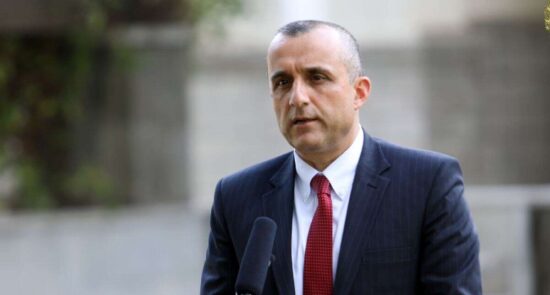
Amrullah Saleh, the former Vice President of Afghanistan, has predicted the eventual collapse of Taliban rule, asserting that the defeat of this group will be celebrated as a national holiday. He deemed the formation of an inclusive government within the current structure as impossible, announcing the emergence of new political and military alliances aimed at establishing a system based on the will of the people.
Predictions of the Regime’s Decline and Rejection of an Inclusive Government
Amrullah Saleh, the leader of the Green Movement and former Vice President of Afghanistan, recently stated that the current Taliban regime will not last much longer, predicting its eventual downfall after enduring numerous internal crises. He described the term “inclusive government” within the existing structure as deceptive and unattainable, emphasizing that the current setup only moves further toward isolation and collapse.
Dismissal of Fragmentation Scenarios and Emphasis on Comprehensive Resistance
Saleh rejected any scenarios of the country’s fragmentation, insisting on the territorial integrity and unity of Afghanistan. He called for continued political and military struggles through a coalition of aligned forces that will be organized based on horizontal cooperation. According to him, after the fall of the Taliban, this group will no longer have the traditional cross-border support it once enjoyed, and the distribution of power will be determined through national mechanisms such as the Loya Jirga, referendums, and the constitution.
Questioning Major Economic Projects Under Taliban Rule
In another part of his statements, the former Vice President evaluated significant economic projects, labeling initiatives like the TAPI gas pipeline, the extraction of the Aynak copper mine by China, and the 10,000 megawatt electricity project as unfeasible under Taliban rule, dismissing them as mere promotional headlines. He urged citizens to hope for a change in the power structure and for a system that reflects the will of the new generation and the public’s voice.
Continued International Illegitimacy and Political Stances
These sharp positions come to light nearly five years after the Taliban took control of Afghanistan, during which no government or international organization has recognized this regime. Throughout this time, various political figures such as Hamid Karzai and Abdullah Abdullah have stressed the need for an inclusive government. Meanwhile, armed resistance groups led by figures like Ahmad Massoud and Yasin Zia have called for fundamental changes to the political system and the restoration of governance to the people, a stance that has consistently faced denial and claims of popular legitimacy from Taliban officials.
-

Pakistan’s Airstrikes in Afghanistan Spark Outrage and Claims of Civilian Casualties
-
Controversial Support: Former Afghan President Karzai Advocates for Taliban Regime
-
Tragic Attack on Shia Worshippers in Herat Leaves 13 Dead
-
Former Afghan President Calls for Return of Girls to Schools on World Science Day
-
Karzai Advocates Peace and Stability, Rejects Use of Afghanistan Against Iran
-
Hamid Karzai Speaks Out on Taliban Restrictions and the Urgent Need for Girls’ Education in Afghanistan


