Taliban Seeks New Diplomatic Ties with U.S. Amid Economic Struggles

The recent statements by the Taliban’s Foreign Minister during an interview with U.S. media regarding the willingness to reopen the American embassy and invite economic investment have sparked numerous reactions and analyses. These new positions raise serious questions about the scope of regional interactions and the ideological direction of the current government.
New Diplomatic Positions and a Call for a Fresh Start
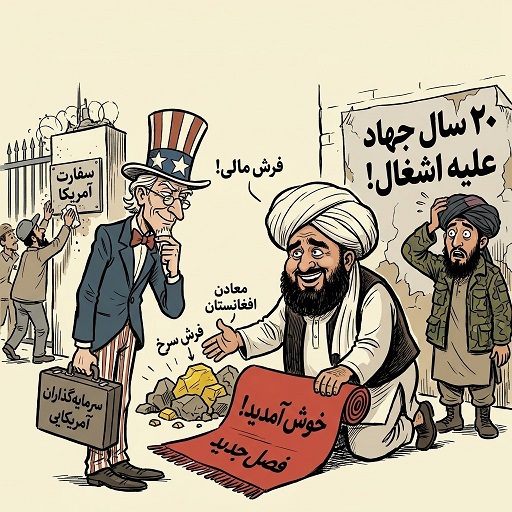
Amir Khan Motaqi, the Taliban Foreign Minister, has ignited extensive discussions in political and media circles following his interview with The New York Times. In this interview, Motaqi officially called for the reopening of the U.S. embassy in Kabul and urged American investors to engage in Afghanistan’s mining and infrastructure sectors.
He expressed a need to embark on a new chapter in the bilateral relationship, urging U.S. officials to pursue direct interactions and normalize political and economic relations.
Theoretical Challenges and Contradictions with Historical Rhetoric
This shift in declared positions occurs at a time when the political structure and social fabric of the Taliban had been built over the last two decades on the slogans opposing the presence and influence of Western powers. The narrative of two decades of struggle and mobilization of youth under the banner of fighting imperialism formed the core identity of this movement.
Now, the emergence of options such as reopening diplomatic missions and sharing national resources has led to a wave of analyses regarding a potential change in ideological principles or an entirely realistic approach by the current leadership.
Reactions and Perspectives on Engagement with Washington
International observers believe these requests highlight the current government’s urgent need to gain international legitimacy and attract foreign investment to navigate through severe economic crises. However, it remains unclear whether the United States will be willing to positively respond to these diplomatic signals.
The main question among analysts is whether the approach of international powers has changed or if the current Kabul regime has been compelled to reassess its past principles and doctrines in light of governance realities.
FEATURED
-

UN: More Than 47,000 Women and Girls Killed by Family Members or Partners in 2025
-
Google Commits $40 Billion to Texas Tech Infrastructure by 2027
-
New Evidence Reveals Alarming Exposure to Explicit Content Among Teens on Instagram
-
Europe Faces Unprecedented Heatwaves and Wildfires as Climate Crisis Intensifies


