Afghan Refugees in Qatar Launch Hunger Strike Over Dire Conditions and Immigration Uncertainty

Afghan refugees residing at the Al-Siliya camp in Qatar have initiated a hunger strike to protest their prison-like conditions and prolonged uncertainty regarding their immigration status. This development comes amidst reports that the U.S. government is considering a budget cut for immigration visa programs in 2026, which could threaten the resettlement of 250,000 refugees…
Life Under Confinement: Struggle for a Resolution
The situation in Afghan refugee camps located in third countries has reached a critical point. Reports from Doha indicate that Afghan refugees at the Al-Siliya camp are expressing their frustrations over the interminable wait and lack of clarity regarding their futures.
Some news sources have confirmed that a number of these refugees have begun a hunger strike to protest what they describe as prison-like conditions and their total state of uncertainty. The protesters have warned that they will not eat until U.S. and Qatari officials provide clarity on their immigration cases.
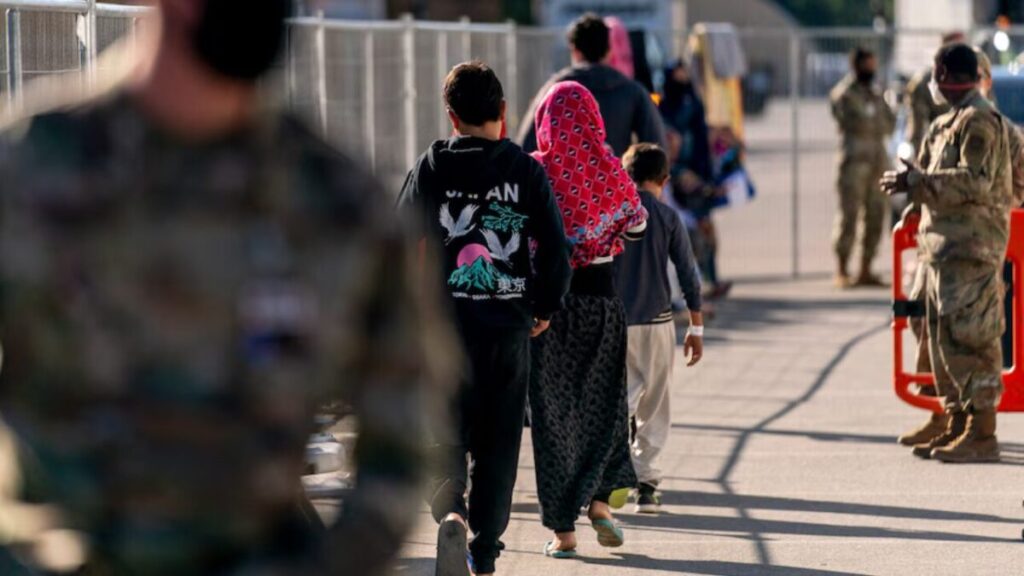
Previously a U.S. military base on the outskirts of Doha, the Al-Siliya camp currently houses around 1,300 to 1,500 Afghan refugees. Residents of the camp claim they have been confined there for years, asserting that they are treated not as refugees but as prisoners.
Washington’s Austerity Policies: Budget Cuts for Immigration Visas
These protests coincide with troubling news emerging from Washington. A report by the Washington Post published in August revealed that officials, both current and former, of the U.S. State Department indicated that the Trump administration is undergoing a significant review and may withdraw from the Afghan Refugee Resettlement Program.
According to these reports, the proposed U.S. budget for fiscal year 2026 eliminates key elements of the Afghan Special Immigrant Visa (SIV) program. Experts warn that if this budget is implemented in October, the resettlement process for refugees could face severe challenges, potentially grinding to a halt altogether.
The Threat of Deportation for 250,000 Individuals
The shift in U.S. policy has cast a shadow over the futures of more than 250,000 Afghan refugees, including local government collaborators, translators, and former U.S. military staff. These individuals, who are currently stranded in numerous countries including Qatar, the United Arab Emirates (Abu Dhabi camp), and Albania, face the serious risk of forced repatriation to Afghanistan.
Conditions in the camps in Abu Dhabi and Albania are reported to be similar to those in Qatar, where thousands of other Afghans continue to await their visas and relocation to the United States. However, as time passes, their hope is turning into despair, leading many to feel forgotten by their former allies.
-

Russia Critiques West’s Treatment of Afghan Refugees Amid Growing Concerns
-
Rising Tensions as Deadline Approaches for Al-Siliya Camp’s Closure
-
India Upgrades Kabul Mission to Embassy, Signals Shift in Taliban Relations
-
Afghan Refugees in Qatar and Rwanda Face Uncertain Futures and Lost Financial Support
-
Urgent Warning Over U.S. Defense Budget Draft Threatening Afghan Allies’ Relocation
-
Amrullah Saleh Accuses Qatar of Supporting Taliban Brutality in Afghanistan