Human Rights Watch Urges Investigation into Pakistani Airstrikes in Afghanistan
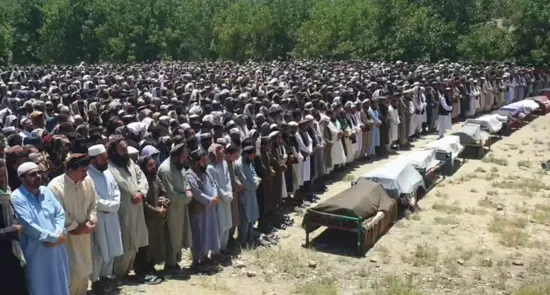
The Human Rights Watch has declared the air and artillery strikes conducted by the Pakistani military on Afghan territory as illegal, urging for an independent international investigation into potential war crimes. This comes as Kabul strongly dismisses Islamabad’s security claims, labeling these actions as blatant violations of its territorial integrity.
The Recent Civilian Casualties and Denouncement by Human Rights Watch
In response to a surge in civilian casualties along the border and within various Afghan regions, Human Rights Watch issued an official statement condemning the recent airstrikes by the Pakistani military. The esteemed international organization pointed to concrete evidence and statistics provided by the United Nations Assistance Mission in Afghanistan (UNAMA), calling for the establishment of an impartial commission to investigate the legal aspects of these attacks and identify potential instances of war crimes.
UNAMA’s documented findings reveal that during the Pakistani airstrikes on the provinces of Kunar, Paktia, and Paktika, dozens of civilians, including defenseless women and children, have either been killed or injured. Although Pakistani military officials have publicly claimed that armed militants were the targets of these operations, international organizations and eyewitnesses have dismissed these assertions, emphasizing the civilian status of the victims.
A Humanitarian Catastrophe: Attack on Hope Medical Center and Border Bombardments
A significant portion of Human Rights Watch’s concern revolves around the brutal attack on the Hope treatment center for drug addicts in Kabul. Detailed technical and field investigations indicate that this facility had no military function or armed presence, and attacking it constitutes a clear violation of international humanitarian law. International law experts have described this assault as one of the most ruthless cross-border military actions this year, leading to heavy casualties among defenseless patients.
Simultaneously, reports from Kunar province highlight further dimensions of this humanitarian crisis. The ongoing artillery and aerial assaults have not only resulted in civilian casualties among families and young children but have also forced the closure of essential infrastructure, including dozens of medical centers along the border, completely severing local access to primary healthcare services.
Diplomatic Tensions and Rejection of Islamabad’s Claims by the United Nations
Islamabad officials have consistently argued that these attacks are a response to the destructive activities of militants operating from Afghan soil against Pakistan’s interests. However, the current ruling authorities in Kabul dismiss these accusations, viewing Pakistan’s security issues as a purely internal matter and stressing that no group will be permitted to exploit their territory.
Moreover, the United Nations has confirmed in its monitoring reports that, to date, no credible evidence has been provided by Pakistan to demonstrate that internal armed actions within its borders are directed or organized through Kabul.
In conclusion, Human Rights Watch has called on the global community to respond decisively, urging all parties involved to unconditionally adhere to principles that distinguish between military and civilian targets. The organization emphasizes that the continued unjustified and indiscriminate bombings will have severe consequences for regional stability and the international commitments of the perpetrators.
-

UN Calls for Urgent Action as Afghanistan Faces Deepening Crisis
-
Afghanistan’s Road Crisis: Over 92% Unpaved, Threatening Access to Healthcare
-
Returnees from Pakistan Face Dire Educational and Economic Challenges for Daughters
-
Tensions Flare Again Along the Durand Line Amid Conflicting Claims
-
UN Official Urges Essential Role of Women in Afghan Humanitarian Efforts
-
Turkey’s Intelligence Chief Engages in Security Talks in Afghanistan and Pakistan