Taliban Officials Claim Security Success Amidst Outcry Over Historical Atrocities
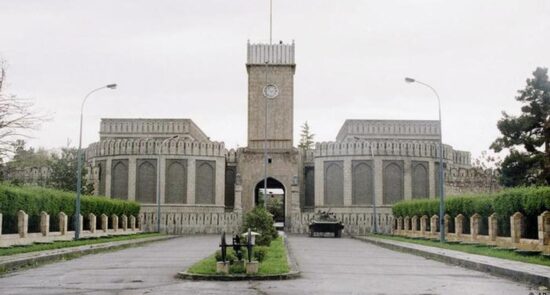
In a seminar held in Bamyan, officials from the Taliban’s Ministry of Information and Culture proclaimed their achievement of nationwide security while defending their past and present actions. However, critics and media outlets challenged these narratives, referencing the horrific massacre of three thousand civilians in Bamyan and the severe media oppression currently in place.
Seminar Highlights and Government Claims
Bamyan hosted a special seminar for journalists, where senior officials from the Taliban’s Ministry of Information and Culture elaborated on the current regime’s positions and the responsibilities of the media. The government representatives emphasized what they regarded as significant improvements in security, proudly underscoring it as their chief achievement. Abdul Haq Hamad, one of the ministry officials, defended the group’s track record by claiming that the initial actions of their former leader, Mullah Mohammad Omar, constituted a revolutionary uprising aimed at liberating the people from the hands of the country’s oppressors.
This Taliban official criticized the two-decade presence of international forces, asserting that despite proclamations of freedom and human rights, hundreds lost their lives daily during the republic’s tenure. He also cited security changes in the Dasht-e-Barchi area of Kabul, urging residents of the capital’s western districts to compare the current stability with past challenges, a statement that notably avoided referencing the perpetrators of past organized blasts and assassinations. For more insights, see Bamiyan Seminar: Taliban Officials Defend Security Claims Amidst Criticism of Historical Atrocities.
Challenging Government Claims with Historical Evidence
The assertions made by Kabul officials in the heart of Bamyan have sparked a wave of documented criticisms from various media sources. Eyewitness accounts and field investigations reveal that this very group has been responsible for a significant portion of the atrocities and violence that have plagued Afghanistan over the past four decades. Documented evidence shows that during their first rule, over three thousand civilian residents, primarily from the Shiite community of Bamyan, were brutally massacred. The historic tragedy of Kahol-e-Walang, with hundreds executed and mass shootings in Dasht-e-Sar-e-Asiab and Barsena, is just one aspect of this tragic history.
Many of these documented reports refer to horrifying incidents such as the execution of family members in Dasht-e-Isa Khan, where even an eight-month-old infant was not spared. Additionally, evidence suggests that some individuals involved in the mass shootings of civilians in the Vadi-e-Sadat valley on March 23, 2001, are now serving as senior security officials within the Bamyan administration. Other chilling acts, such as the beheading of shepherds in Kotal-e-Shahidan and forced use of hundreds of civilian captives to destroy gardens in northern Qarabagh and forced labor in the Ghorband valley, severely undermine claims of a liberating revolution. For a deeper dive on the implications of media, check out Afghan Media Faces Crisis Amid Taliban’s Claims of Support.
Structural Limitations and the Economic Crisis
Critics of the current regime argue that the group’s approach has not fundamentally changed since its return to power in recent years. There has been an unprecedented level of censorship and restrictions on media freedom, systemic and physical elimination of political opponents, discriminatory practices against non-Pashtun ethnic groups, and obstacles to Shiite religious practices, which are all clear indicators of this oppressive atmosphere.
Alongside these profound social and political challenges, the country’s residents are grappling with a crushing economic crisis. The widespread dismissal of professional employees from government and non-governmental organizations, obstruction of economic cycles, and unprecedented spikes in poverty and unemployment have driven the populace to the brink of disaster; a situation that illustrates how the claimed current stability has come at the cost of media silence and absolute poverty within society. For more updates on these relevant challenges, see Escalating Repressiveness: Taliban Intensifies Pressure on Kabul Residents.
FEATURED
-
Federal Court Documents Expose Teenagers’ Exposure to Explicit Content on Instagram
-

Australia Implements Strict Social Media Ban for Teens Under 16
-
Alarming Survey Reveals One in Ten Women in British Armed Forces Experience Sexual Violence
-
Google to Invest $40 Billion in Texas, Boosting AI and Cloud Infrastructure by 2027


