Human Rights Watch Demands Investigation into Alleged War Crimes by Pakistani Military
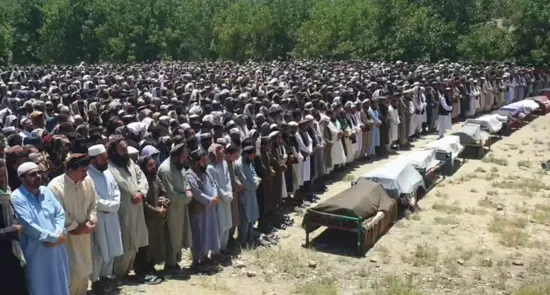
The Human Rights Watch has deemed aerial and artillery attacks by the Pakistani military on Afghan territory illegal, based on reports from the United Nations, and is calling for an independent international investigation into potential war crimes; meanwhile, Kabul firmly rejects Islamabad’s security claims, describing these actions as a blatant violation of its sovereignty…
Increasing Civilian Casualties and Responses
In light of rising civilian casualties in border areas and other regions of Afghanistan, Human Rights Watch has officially condemned recent airstrikes by the Pakistani army. The respected international organization referenced concrete evidence and data provided by the United Nations Assistance Mission in Afghanistan (UNAMA), demanding the establishment of a neutral and independent commission to investigate the legal dimensions of these attacks and identify instances of possible war crimes.
UNAMA’s documented findings reveal that during the Pakistani military’s airstrikes on the provinces of Kunar, Paktia, and Paktika, dozens of civilians, including defenseless women and children, have been killed or injured. While Pakistani military officials have publicly claimed that these operations targeted armed militants, international organizations and eyewitnesses have dismissed these assertions, emphasizing the civilian nature of the victims.
A Humanitarian Catastrophe and the Attack on the Hope Treatment Center
A significant part of Human Rights Watch’s concerns centers around the brutal attack on the Hope treatment center for drug dependence in Kabul. In-depth technical and field investigations indicate that this center had no military function or armed presence, and targeting it constitutes a clear violation of international humanitarian law. International law experts have labeled this assault as one of the most ruthless cross-border military actions of the year, resulting in heavy casualties among vulnerable patients.
Simultaneously, reports from Kunar province reveal additional dimensions of this humanitarian crisis. Continuous artillery and aerial attacks have not only caused fatalities among families and young children but have also led to the closure of vital infrastructure, including dozens of health centers along the border, effectively cutting local populations off from essential health services.
Diplomatic Tensions and UN Rejection of Islamabad’s Claims
Islamabad officials have consistently claimed that these attacks are responses to the destructive activities of militants operating from Afghan soil against Pakistan’s interests. However, the current authorities in Kabul dismiss these accusations, considering Pakistan’s security issues as entirely internal matters and emphasizing their commitment to preventing any group from exploiting Afghan territory.
Furthermore, the United Nations has confirmed in its oversight reports that no credible evidence has been provided by Pakistan indicating that the armed violence occurring within its borders is directed or organized from Kabul.
Ultimately, Human Rights Watch has called upon the global community for a serious response, urging all involved parties to unconditionally adhere to the principles of distinction between military and civilian targets. The organization stresses that the continuation of indiscriminate bombing without legal justification will have severe repercussions for regional stability and the international commitments of those responsible.
FEATURED
-
Federal Court Documents Expose Teenagers’ Exposure to Explicit Content on Instagram
-

Australia Implements Strict Social Media Ban for Teens Under 16
-
Alarming Survey Reveals One in Ten Women in British Armed Forces Experience Sexual Violence
-
Google to Invest $40 Billion in Texas, Boosting AI and Cloud Infrastructure by 2027


