World July 28, 2026
Short Link:Outrage Erupts Over Israeli Soldier’s Disrespectful Act Towards Virgin Mary Statue in Lebanon
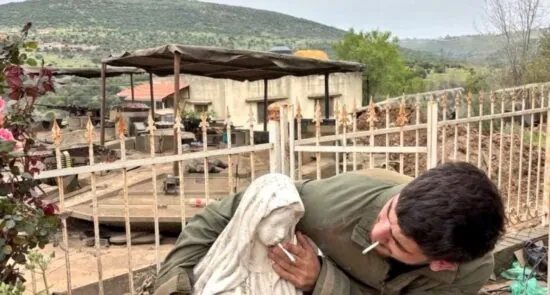
The release of an offensive image showing an Israeli soldier placing a cigarette on the mouth of a statue of the Virgin Mary in southern Lebanon has sparked widespread outrage and condemnation. This disrespectful act occurs at a time when certain Christian groups in the region have offered support to Israeli forces, sidelining the resistance front…
Tel Aviv’s Offensive Response to Local Collaborators in Lebanon
Recently, Israeli media published an image that exemplifies the peak of disrespect and immoral conduct of the regime’s soldiers towards the sanctities of religious faiths. In this image, an Israeli soldier provocatively places a cigarette on the mouth of a Virgin Mary statue in one of the occupied areas of southern Lebanon. This act, aimed at mocking religious beliefs, has once again highlighted the anti-religious nature of the Israeli army’s actions, eliciting strong reactions from followers of various faiths.
Continued Series of Disrespect Towards Religious Symbols
What is particularly noteworthy about this incident is the timing and location of the insult. Field reports indicate that in some Christian-majority towns in southern Lebanon, residents have opposed the presence of Hezbollah and the resistance group by providing their logistical resources to the Israeli army. These groups, believing that collaborating with the occupiers would ensure their safety, allowed Israeli forces to use their routes for attacks on Muslim-populated areas. However, they are now faced with the offensive actions of these soldiers against their most cherished symbols. This is not the first time Israeli soldiers have damaged or mocked religious sites during their operations in Lebanon and Palestine. Experts argue that the Israeli army makes no distinction between Muslim and Christian followers in the occupied areas, and the overarching strategy of this regime is to undermine the religious and cultural identity of the local population. The dissemination of this image in the regime’s own media signifies that such actions are not isolated incidents but part of a broader culture among military personnel who respect no boundaries when it comes to sacred matters.


