World April 30, 2026
Short Link:Navigating Crisis: The Unfolding Challenges of the U.S. Naval Blockade on Iran
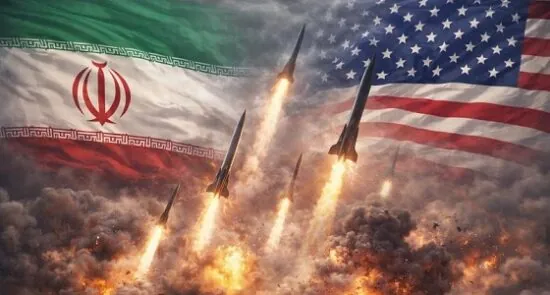
The geopolitical crisis in 2026 surrounding the naval blockade of Iran’s ports by the United States has evolved into one of the most intricate and costly military and economic confrontations of the 21st century…
The Strategic Impasse: A Comprehensive Analysis of the Strait of Hormuz
The confrontation aimed at crippling Tehran’s negotiating power and forcing its acceptance of a new nuclear agreement is now on the verge of becoming a strategic failure for Washington. A thorough analysis of field data, economic simulation models, and insights from political elites suggests that the unique geography of the Strait of Hormuz, Iran’s asymmetric battle doctrine, and the interdependence of global supply chains have severely undermined the efficacy of the blockade strategy. While the White House insists on maintaining pressure, macroeconomic indicators in the U.S. and Europe point to an unprecedented stagflation that could challenge U.S. maritime hegemony, akin to a new Suez Crisis.1
The Maritime Paradox: Operational Insights from the Strait of Hormuz
The geo-strategic landscape of the Persian Gulf and the Strait of Hormuz imposes significant inherent limitations on the U.S. Navy. The narrowest point of the Strait, measuring only 33 kilometers, has become a natural “shooting gallery,” where large and costly American fleets lack adequate maneuvering space.1 Military analyses reveal that the Iranian Revolutionary Guard Corps Navy (IRGCN), having recognized these limitations, has established an environment where “speed, numbers, and stealth” outweigh “tonnage and technology.”2
Iran’s strategy in this confrontation is rooted in an “access denial” framework (A2/AD). The utilization of underground missile cities along the extensive Persian Gulf shoreline enables Iran to deploy anti-ship cruise missiles like “Qadir” and “Persian Gulf” in a mobile and undetectable manner.1 These infrastructures are impervious to destruction without a large-scale ground invasion—politically and militarily infeasible for Washington considering Iran’s population of 92 million.1 In fact, despite more than 13,000 airstrikes, the United States has succeeded only in degrading part of Iran’s defensive capabilities, while over half of its offensive missiles and drones remain operational.4
Table 1: Assessment of Weapon Costs and Asymmetric Exchange Rates (2026)
| Weapon/System Type | Country | Approximate Cost per Unit (USD) | Reserves and Consumption Rate | Strategic Implications |
| THAAD Interceptor Missile | United States | 15.5 million | Consumption of 190 to 290 units from 360 available 4 | Depletion of global ballistic defense reserves |
| Patriot PAC-3 Missile | United States | 3.9 million | 50% of total global reserves consumed 4 | Inability to cover allied fronts |
| Tomahawk Cruise Missile | United States | 2.6 million | 850 units launched from 3,100 units in reserve 4 | Reduced long-range strike capability |
| Shahed Kamikaze Drone | Iran | 20,000 | Thousands in inventory with rapid reproduction capability 1 | Imposing high costs on enemy defenses |
| Smart Mines and UUVs | Iran | Negligible | Unclear – Deployed at strategic points 1 | Uninsurable shipping routes |
This table clearly illustrates the “technology paradox”; advanced Aegis and Patriot systems face a “depth magazine crisis” when confronted by swarms of inexpensive drones.1 Updated simulations for 2026 indicate that if hostilities continue at the current intensity, U.S. precision munitions stock will be exhausted in less than four weeks, rendering the blockade logistically unfeasible.1
Lessons from History: Why Naval Blockades Rarely Succeed
A review of historical experiences from the 19th and 20th centuries reveals a recurring pattern of blockade failures against countries with strategic depth and resolute political will. The current U.S. blockade of Iran bears troubling similarities to Napoleon Bonaparte’s “Continental System.” Napoleon aimed to incapacitate the British economy by blocking European ports to British goods, but this action not only spurred unprecedented smuggling but also alienated France’s allies due to economic pressures.5 Today, the United Kingdom, a traditional ally of Washington, has openly stated that it will not participate in the blockade of Iranian ports, signaling a fracture in international consensus.5
The Vietnam War experience presents painful lessons for Pentagon strategists. At that time, air and naval supremacy was thought to be absolute, enough to bring North Vietnam to its knees; however, Hanoi’s political resolve and use of asymmetric strategies invalidated all U.S. statistical calculations.6 Curtis LeMay, the then-head of the U.S. Air Force, famously promised to return Vietnam to the “Stone Age”; a statement recently echoed by Donald Trump regarding Iran, yet history shows that bombing infrastructure does not necessarily compel political concessions.6
Comparative Analysis: Tanker War (1980s) vs. 2026 Crisis
Some analysts believed that the U.S. could replicate its “Operation Earnest Will” model from the 1980s, but technological advancements in Iran have rendered this comparison obsolete.9 In the 1980s, Iran relied solely on fast boats and simple mines, whereas it now possesses a combination of drones, unmanned underwater vehicles (UUVs), and anti-ship ballistic missiles, transforming any escort operation into a logistical nightmare.9 In the 1980s, the U.S. managed to escort Kuwaiti tankers flying the American flag; however, in 2026, even the presence of aircraft carriers cannot guarantee commercial traffic security, where the impact of a single inexpensive missile could disrupt the entire global maritime insurance system.1
Global Economic Pressure: Beyond Oil Prices
Although soaring oil prices exceeding $126 a barrel and dire forecasts of $190 capture media attention, the blockade’s impact on global supply chains extends far beyond fuel.10 The Strait of Hormuz is not only a vital artery for energy, but also a crucial pathway for advanced industrial inputs, without which the 21st-century digital economy faces a stalemate.
The Helium Crisis and Semiconductor Industry Collapse
One of the most critical and overlooked consequences of the blockade is the disruption to helium production and exports. Qatar, which supplies about 30% of the world’s helium, has seen a 14% reduction in output due to instability in the Persian Gulf.12 Helium is irreplaceable in the production of advanced chips and in cooling MRI machines and superconducting magnets.
- Impact on Artificial Intelligence (AI): Companies producing high-bandwidth memory (HBM) like Samsung and SK Hynix, which are primary suppliers to Nvidia, rely heavily on helium and LNG imports from the Persian Gulf.13
- The Taiwan Crisis: TSMC, the brain behind the global AI chip industry, imports 97.7% of its energy and currently has LNG reserves for only seven days.13 Disruptions in this supply chain mean halting AI cluster development for Microsoft and Google.14
Table 2: Effects of the Blockade on Non-Oil Strategic Goods (2026)
| Commodity/Raw Material | Role in Supply Chain | Global Dependence on the Region | Direct Consequence of the Blockade |
| Helium | Cooling chip manufacturing processes | 30% (solely from Qatar) 12 | 40% price increase within a week 12 |
| Sulfur | Sulfuric acid and battery production | 50% of maritime trade 15 | Halting fertilizer and lithium battery production |
| Urea and Ammonia | Production of chemical fertilizers | 20-30% of global production 16 | 120% increase in food prices in the Middle East 17 |
| Aluminum | Automotive and aerospace industries | Largest producers (ALBA) 15 | Halted production lines for Toyota and BMW 15 |
These data reveal that the blockade of Iran has become an act of “economic self-harm” for the West. Disruptions in agricultural and industrial inputs have put 30 million people in developing countries at risk of absolute poverty.18
The U.S. Economy at the Precipice: Recession, Inflation, and Elections
Within the United States, the “maximum pressure” strategy has turned into a heavy political and economic burden for the Trump administration. Gasoline prices have reached $4, and inflation hit 3.3% in March 2026, severely diminishing the purchasing power of American households, while consumer confidence has plummeted to a historical low of 47.6.19 Leading economists warn that this situation is not a transient fluctuation, but rather a profound “stagflation shock.”10
Insights from Prominent Economists
Analysts from Wall Street and prestigious universities in the U.S. now speak with unprecedented clarity about the risks of recession:
- Paul Krugman: He believes that most analysts have underestimated the implications of keeping the Strait of Hormuz closed. Krugman claims that if the blockade continues for another three months, the likelihood of a total global recession is over 50%.10
- Larry Summers: Former U.S. Treasury Secretary, estimates a 70% chance of recession beginning in the next 12 months. He attributes this bleak outlook to a combination of commodity shocks, credit contraction, and persistent inflation.20
- Nouriel Roubini (Dr. Doom): He believes regional banks in the U.S., which are primary providers of loans for housing and small businesses, are highly vulnerable to this crisis and a “hard landing” for the U.S. economy is inevitable.20
Reports from Oxford Economics indicate that if the blockade persists for six months, global GDP growth could plummet to 1.4% and the U.S. will enter a formal contraction phase.11 In this scenario, global inflation could reach 7.7%, reminiscent of the crises of the 1970s.11
The Political Front: A War of Words and Diplomatic Stalemate
The rhetoric from politicians on both sides of this conflict reflects a strategic stalemate, with neither party willing to back down, even as costs escalate sharply.
Washington’s Narrative: Trump’s Big Gamble
Donald Trump insists via social media that the blockade is a success. He claims, “Iran has just informed us they are on the verge of collapse. They want us to open the Strait of Hormuz as soon as possible.”22 In a meeting with oil executives, he emphasized that the blockade would continue until a “full nuclear capitulation” is achieved.10 However, intelligence reports suggest he is deeply concerned about the impact of gasoline prices on electoral polls and is seeking a way out of the war without losing credibility.24
Tehran’s Narrative: Asymmetric Resilience and the Leveraging of the Strait
In contrast, Iranian leaders have labeled the blockade as “piracy” and emphasized their ability to cut global lifelines.
- Mohammad Bagher Qalibaf: The Speaker of Iran’s Parliament stated clearly, “A complete ceasefire only makes sense when it is not violated by naval blockades and the hostage-taking of the world economy… Reopening the Strait of Hormuz cannot happen under threats.”26 He warned global market actors not to fall for Trump’s claims of victory.27
- Ahmad Vahidi: A senior commander and influential politician, insists on a no-negotiation strategy until the blockade is comprehensively lifted. He believes Iran can withstand economic pressures longer than U.S. taxpayers can handle.1
- Masoud Pezeshkian: President of Iran has described the blockade as “doomed to fail” and identifies it as the source of primary tension in the Persian Gulf.29
The Shadow Fleet and the Breakdown of Blockade Mechanisms
A key reason for the blockade’s ineffectiveness is Iran’s “Ghost Fleet” operations. Vessel tracking data indicates that despite Centcom’s claims of full control over the Strait, 43 ships associated with Iran passed through the Strait of Hormuz during the first week of the blockade.30 Iran employs sophisticated tactics like turning off trackers (AIS), ship-to-ship transfers (STS) in Pakistani waters, and utilizing aging tankers that have evaded radar for years.24
Table 3: Actual Effectiveness of the Blockade Based on Tanker Tracking Data (April 2026)
| Operational Parameters | U.S. Claim (Centcom) | Independent Reports (Lloyd’s List/Vortexa) | Gap Analysis |
| Number of Ships Stopped | 39 ships since start 23 | 43 Iranian-associated ships have passed 30 | Systemic leaks in blockade |
| Iran’s Crude Oil Exports | Near zero 33 | 1.56 million barrels per day (slight reduction) 30 | Continued revenue generation via Ghost Fleet |
| Primary Export Destination | Unclear | Small refineries (Teapots) in China 23 | Failure to cut off the China-Iran financial lifeline |
| Control over the Strait of Hormuz | “Sealed” 23 | Tankers carrying 10.7 million barrels have passed 30 | Reluctance to engage with Chinese-flagged tankers |
This disparity illustrates that the U.S. is caught between two options: a “military confrontation with Chinese-flagged tankers” and “accepting leaks in the blockade.” Attacking oil-bearing vessels risks inviting another superpower into the conflict, a scenario Washington is keen to avoid.25
Conclusion: Strategic Stalemate and the Need for Reevaluation
This investigation indicates that the U.S. marine blockade strategy against Iran in 2026 faces three fundamental barriers leading it toward failure:
Firstly, there is a cost asymmetry; where the Pentagon is depleting its strategic munitions stockpile to counter low-cost threats. Secondly, the interdependence of global supply chains directly impacts critical industries (artificial intelligence and semiconductors) and world food security. Thirdly, the lack of international consensus provides Iran the leverage to maintain significant revenue streams with the help of its shadow fleet and informal financial networks.
While Donald Trump emphasizes sustained pressure for months ahead, economic evidence suggests that the “pain tolerance” within Western societies is far less than in Iran. Stagflation in the United States, coupled with rising discontent among Asian and European allies over soaring energy prices, is likely to compel Washington to retreat or accept a minimal agreement before Tehran capitulates. The 2026 crisis has demonstrated that in an age of intertwined supply chains, a naval blockade is a double-edged sword without a clear victor and will only further weaken the existing economic order. Iran’s transformation of the Strait of Hormuz into a global leverage point illustrates that world energy security is either “for all or for none”; a reality gradually acknowledged by pragmatic economists and politicians in Washington.25
Works cited
1. US Naval Intervention in the Strait of Hormuz: Risk Scenario, accessed April 30, 2026, https://www.specialeurasia.com/2026/04/12/us-naval-intervention-hormuz/
2. Swarm Deterrence in the Strait of Hormuz: Iran’s IRGC Navy, Asymmetric Maritime Strategy, and the Future of Littoral Warfare – ResearchGate, accessed April 30, 2026, https://www.researchgate.net/publication/401274211_Swarm_Deterrence_in_the_Strait_of_Hormuz_Iran’s_IRGC_Navy_Asymmetric_Maritime_Strategy_and_the_Future_of_Littoral_Warfare
3. The Strait of Hormuz Under Pressure: Asymmetric Naval War and Signs of Elite Fragmentation in Iran | Hudson Institute, accessed April 30, 2026, https://www.hudson.org/national-security-defense/strait-hormuz-under-pressure-asymmetric-naval-war-signs-elite-can-kasapoglu
4. Extended naval blockade is admission US military escalation poses even greater risk, accessed April 30, 2026, https://www.theguardian.com/world/2026/apr/23/extended-naval-blockade-is-an-admission-us-military-escalation-poses-even-greater-risk
5. A FAILED CEASEFIRE? ON THE AMERICAN NAVAL BLOCKADE OF IRAN – Geojuristoday, accessed April 30, 2026, https://www.geojuristoday.in/post/a-failed-ceasefire-on-the-american-naval-blockade-of-iran
6. Has the US forgotten the lessons of Vietnam? – Counterfire, accessed April 30, 2026, https://www.counterfire.org/article/has-the-usa-forgotten-the-lessons-of-vietnam/
7. From Vietnam to Iran : Lessons US ignored – The Indian Panorama, accessed April 30, 2026, https://www.theindianpanorama.news/opinion/as-i-see-it/from-vietnam-to-iran-lessons-us-ignored/
8. US naval blockade strains Iran’s already fragile economy | International | EL PAÍS English, accessed April 30, 2026, https://english.elpais.com/international/2026-04-24/us-naval-blockade-strains-irans-already-fragile-economy.html
9. Analysis: The US protected ships from Iran in the Strait of Hormuz in the ’80s. Could it again?, accessed April 30, 2026, https://www.sooleader.com/michigan-news-ap/analysis-the-us-protected-ships-from-iran-in-the-strait-of-hormuz-in-the-80s-could-it-again-12187638
10. Oil price tops $126 a barrel after Trump warns Iran blockade could …, accessed April 30, 2026, https://www.theguardian.com/world/2026/apr/30/oil-price-news-highest-since-2022-us-iran-ceasefire-strait-of-hormuz
11. Prolonged war in Iran could tip the global economy into recession, accessed April 30, 2026, https://www.oxfordeconomics.com/resource/prolonged-war-in-iran-could-tip-the-global-economy-into-recession/
12. How the Iran Conflict Is Rippling Across Global Supply Chains – Z2Data, accessed April 30, 2026, https://www.z2data.com/insights/how-the-iran-conflict-is-rippling-across-global-supply-chains
13. Can the Iran war disrupt AI chip production? | J.P. Morgan Asset Management, accessed April 30, 2026, https://am.jpmorgan.com/us/en/asset-management/liq/insights/market-insights/market-updates/on-the-minds-of-investors/can-the-iran-war-disrupt-ai-chip-production/
14. The Iran War May End Soon. The Damage to the Artificial Intelligence (AI) Chip Supply Chain Has Already Been Done., accessed April 30, 2026, https://www.fool.com/investing/2026/04/24/iran-war-may-end-damage-ai-chip-supply/
15. The Economic Impact of the Iran War: A Global Supply Chain Shock, accessed April 30, 2026, https://blogs.lse.ac.uk/mec/2026/04/15/the-economic-impact-of-the-iran-war-a-global-supply-chain-shock/
16. The Iran War and the End of the US-Gulf “Oil for Security” Deal, accessed April 30, 2026, https://arabcenterdc.org/resource/the-iran-war-and-the-end-of-the-us-gulf-oil-for-security-deal/
17. Economic impact of the 2026 Iran war – Wikipedia, accessed April 30, 2026, https://en.wikipedia.org/wiki/Economic_impact_of_the_2026_Iran_war
18.accessed April 30, 2026, https://www.iranintl.com/fa/202604259846
19. The U.S. Economy Was Shaky Before the Iran War. Now It’s in Real …, accessed April 30, 2026, https://www.cfr.org/articles/the-u-s-economy-was-shaky-before-the-iran-war-now-its-in-real-trouble
20. The credit crunch is here and it could cripple the economy. Here’s what Larry Summers, Nouriel Roubini and 7 other experts have said on the emerging threat. – Markets Insider, accessed April 30, 2026, https://markets.businessinsider.com/news/stocks/larry-summers-nouriel-roubini-gundlach-david-solomon-credit-crunch-recession-2023-4
21. Musk, Roubini and Goldman warn of rising US recession risk | The Straits Times, accessed April 30, 2026, https://www.straitstimes.com/business/economy/goldman-warns-us-recession-risk-now-higher-and-more-front-loaded
22. Trump in tough spot as he tries to avoid deal that highlights US failures in Iran, accessed April 30, 2026, https://www.theguardian.com/world/2026/apr/29/us-tough-spot-deal-highlights-failures-iran-war-strait-of-hormuz-nuclear-weapon
23. Strait of Hormuz | International Crisis Group, accessed April 30, 2026, https://www.crisisgroup.org/trigger-list/iran-usisrael-trigger-list/flashpoints/strait-hormuz
24. Trump Tells Aides to Prepare for Extended Blockade of Iran, accessed April 30, 2026, https://www.unitedagainstnucleariran.com/news/trump-tells-aides-to-prepare-for-extended-blockade-of-iran
25. Iran’s Strait of Hormuz Gambit and the Limits of U.S. Military Power – CSIS, accessed April 30, 2026, https://www.csis.org/analysis/irans-strait-hormuz-gambit-and-limits-us-military-power
26. TABNAK, accessed April 30, 2026, https://www.tabnak.ir/fa/news/1368604/%D9%BE%D8%A7%D8%B3%D8%AE-%D9%82%D8%A7%D9%84%DB%8C%D8%A8%D8%A7%D9%81-%D8%A8%D9%87-%DA%AF%D9%86%D8%AF%D9%87%E2%80%8C%DA%AF%D9%88%DB%8C%DB%8C-%D8%AA%D8%B1%D8%A7%D9%85%D9%BE
27. accessed April 30, 2026, https://ana.ir/fa/news/1052350/%D8%B1%D9%88%D8%A7%DB%8C%D8%AA-%D9%82%D8%A7%D9%84%DB%8C%D8%A8%D8%A7%D9%81-%D8%A7%D8%B2-6-%D8%B4%DA%A9%D8%B3%D8%AA-%D8%AF%D8%B4%D9%85%D9%86-%D8%AA%D8%B1%D8%A7%D9%85%D9%BE-%D8%A8%D9%87-%D8%AF%D9%86%D8%A8%D8%A7%D9%84-%D8%AA%D8%B3%D9%84%DB%8C%D9%85-%D8%A7%DB%8C%D8%B1%D8%A7%D9%86-%D8%A7%D8%B2-%D8%B7%D8%B1%DB%8C%D9%82-%D8%A7%D8%AE%D8%AA%D9%84%D8%A7%D9%81-%D8%AF%D8%A7%D8%AE%D9%84%DB%8C-%D9%88-%D9%85%D8%AD%D8%A7%D8%B5%D8%B1%D9%87-%D8%AF%D8%B1%DB%8C%D8%A7%DB%8C%DB%8C-%D8%A7%D8%B3%D8%AA-%D8%B5%D9%88%D8%AA
28. Iran Update Special Report, April 29, 2026 – Institute for the Study of War, accessed April 30, 2026, https://understandingwar.org/research/middle-east/iran-update-special-report-april-29-2026/
29. Iran’s president says US naval blockade is ‘doomed to fail’ | The Times of Israel, accessed April 30, 2026, https://www.timesofisrael.com/liveblog_entry/irans-president-says-us-naval-blockade-is-doomed-to-fail/
30. How Real Is the Naval Blockade of Iran?, accessed April 30, 2026, https://www.meforum.org/mef-observer/how-real-is-the-naval-blockade-of-iran
31. Trump likes a naval blockade. But Iran presents big differences from Venezuela and Cuba, accessed April 30, 2026, https://apnews.com/article/iran-blockade-strait-hormuz-trump-navy-f7af4e8f73dc75e158790db8c32296ac
32. US Navy Blockade on Iranian Ports: Military Analysis 2026 – Discovery Alert, accessed April 30, 2026, https://discoveryalert.com.au/us-navy-blockade-iranian-ports-2026-economic-impact/
33. The U.S. Naval Blockade is Working and Effective — FAQs and Key Facts | UANI, accessed April 30, 2026, https://www.unitedagainstnucleariran.com/press-releases/us-naval-blockade-working-and-effective-faqs-and-key-facts
34. U.S. military is poised to blockade Iranian ports, while Tehran threatens ports in the Mideast, accessed April 30, 2026, https://www.pbs.org/newshour/world/u-s-military-is-poised-to-blockade-iranian-ports-while-tehran-threatens-ports-in-the-mideast
-

Iran Pushes for Diplomatic Peace Between Taliban and Pakistan
-
Iran, Taliban, and Russia Unite for Regional Stability Talks
-
Taliban Emphasizes Chabahar Port as Key Trade Route for Afghanistan
-
Taliban Intelligence Deputy Warns of Firm Defense Against War Threats
-
UN Security Council Faces Division Over Afghanistan Mission Extension
-
Ex-Mossad Officer Claims Epstein Was a Spy for Israel, Blackmailing Trump


