News September 8, 2026
Short Link:UN Warns Expansion of Religious Schools Could Impact Afghanistan’s Future
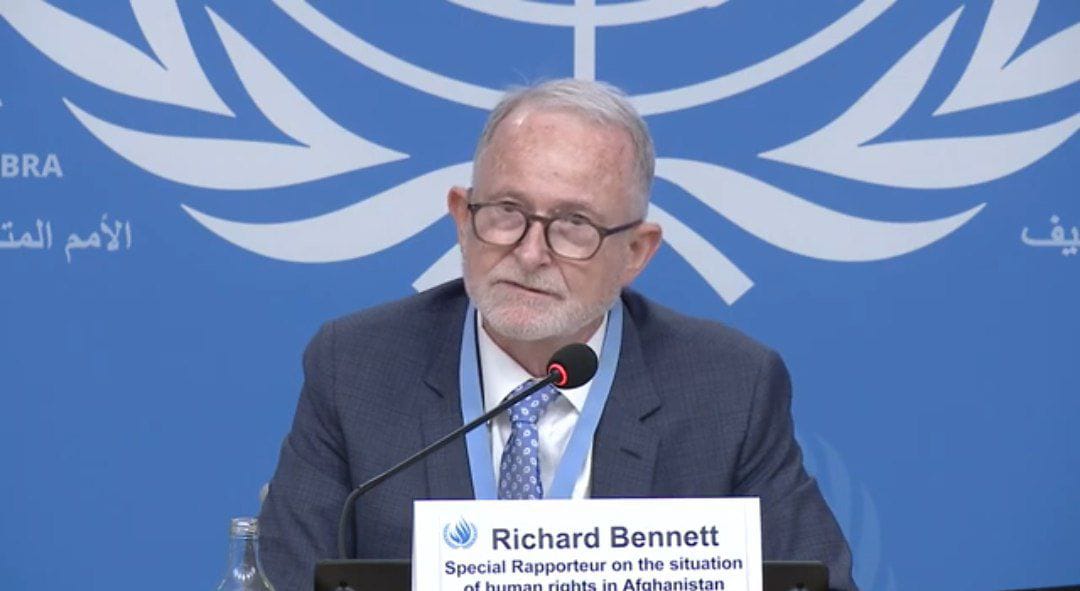
Richard Bennett, the UN Special Rapporteur on Human Rights for Afghanistan, has warned in a recent report that the expansion of religious schools under Taliban governance could reshape the social fabric of Afghanistan and exacerbate the ongoing education crisis.
UN Report: Expansion of Religious Schools in Afghanistan May Alter Social Structure
In a new report, Richard Bennett has highlighted potential permanent changes to Afghanistan’s social structure due to the proliferation of religious schools, which he warns could further intensify the current educational crisis. Bennett announced on Sunday, September 15, via a message on X (formerly Twitter), that the report will be presented to the UN Human Rights Council on Tuesday.
The Taliban’s Ministry of Education announced plans to increase the number of religious schools to more than 23,000 by September 2025. Bennett emphasized that this growth occurs amidst ongoing bans on girls attending secondary schools and universities, which will have long-term negative consequences for Afghanistan’s social and economic landscape.
Afghanistan’s Education System in Crisis
Last week, Taliban spokesman Zabihullah Mujahid reported that over 10.3 million students, including religious scholars, are currently enrolled in religious schools, public schools, and universities. However, Bennett raised concerns about the curriculum of these institutions and the restrictions placed on students. He noted that the outdated curriculum of religious schools in Afghanistan needs to be revised to meet the contemporary needs of society.
Social Implications of Expanding Religious Schools
Experts in the education sector have also stressed that religious education cannot replace general education and that modern sciences should be taught alongside religious studies. Mastoura Silab, an employee of a private educational institution, stated that there should be a simultaneous focus on modern and religious sciences to achieve effective educational outcomes.
Bennett’s report pointed to behavioral and attitudinal changes among students in religious schools, noting that some girls face increased restrictions regarding their appearance and conduct. This surge in the number of religious schools occurs against the backdrop of a profound educational crisis in Afghanistan, particularly affecting girls who have been denied access to secondary and higher education, leaving millions of Afghan women and girls deprived of educational opportunities.
-

Taliban Intensifies Pressure on Afghanistan’s Shia Community: Educational Institutions Targeted
-
UN Calls for Urgent Action as Afghanistan Faces Deepening Crisis
-
Funding Crisis Threatens Women’s Organizations in Afghanistan
-
Clashes Erupt in Kamdish as Taliban and Afghanistan Freedom Front Engage in Heavy Fighting
-
Herat’s Trade Boom: Exchanges with Kazakhstan Reach $581 Million
-
Afghanistan’s Road Crisis: Over 92% Unpaved, Threatening Access to Healthcare