Taliban and Russia Collaborate to Tackle Rising Drug Trade in Afghanistan
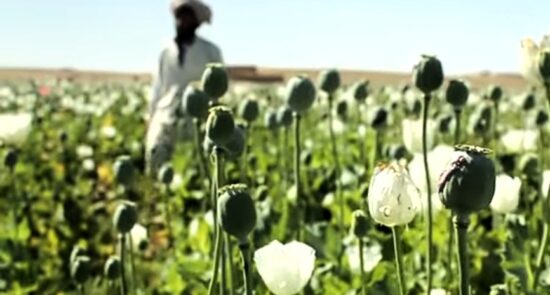
During a recent meeting, Zamir Kabulov and Sirajuddin Haqqani discussed strategies to combat drug trafficking and addressed the latest security developments in the region. They also highlighted security challenges and the current state of opium poppy cultivation in Afghanistan.
Haqqani and Kabulov Discuss Drug Fight
In a meeting between Zamir Kabulov, the Russian President’s Special Envoy for Afghanistan, and Sirajuddin Haqqani, the acting Minister of the Taliban’s Ministry of Interior, various strategies for tackling the cultivation and trafficking of narcotics were discussed. This meeting came at a time when both sides were also examining the latest security and political developments in the region.
Worrisome Statistics on Poppy Cultivation in Afghanistan
A statement released by the Taliban’s Ministry of Interior emphasized Kabul’s achievements in eradicating drugs, commending the efforts made in this area. Meanwhile, Taliban officials shared their views on a recent United Nations report concerning the state of opium poppy cultivation in Afghanistan with the Russian delegation.
Taliban’s Response to the UN Report
The United Nations Office on Drugs and Crime (UNODC) report indicates that the area under opium poppy cultivation in Afghanistan has surged from approximately 10,000 hectares in 2025 to over 43,000 hectares this year. Additionally, the production of opium has jumped from 300 tons to nearly 1,500 tons.
Taliban’s Rebuttal of UN Claims
The Taliban’s Anti-Narcotics Directorate responded to this report, labeling it unfounded and inconsistent with on-the-ground realities. The agency pointed out that their security forces have destroyed more than 26,000 hectares of opium fields before the harvesting stage this year, effectively bringing drug cultivation to near zero.
Kabul Seeks Review of UN Data
Subsequently, Kabul has questioned the methodology used in the UN’s data collection, requesting satellite imagery and technical documentation for an immediate review of this report. These efforts aim to clarify information regarding the fight against drug trafficking.


