Picture Wednesday, 8 April , 2026
Short Link:U.S. Pilot Rescue Operation Fails, Exposes Military Vulnerabilities
The recent failure of the U.S. military in a rescue operation for a downed pilot in southern Isfahan starkly highlights the growing divide between Washington’s claimed military capabilities and the realities on the ground. The destruction of equipment valued at $300 million during this limited operation raises serious questions about the nation’s claimed ability to engage in extensive confrontations with Iran’s defensive power.
Strategic Failure in Rescue Attempt
The recent attempt by U.S. forces to rescue a pilot from a downed fighter jet in southern Isfahan has resulted in a catastrophic strategic failure, costing Pentagon over $300 million in advanced equipment. Modeled on a Hollywood script, the operation met a fate reminiscent of the disastrous Operation Eagle Claw due to the operational realities and Iran’s formidable air defense capabilities.
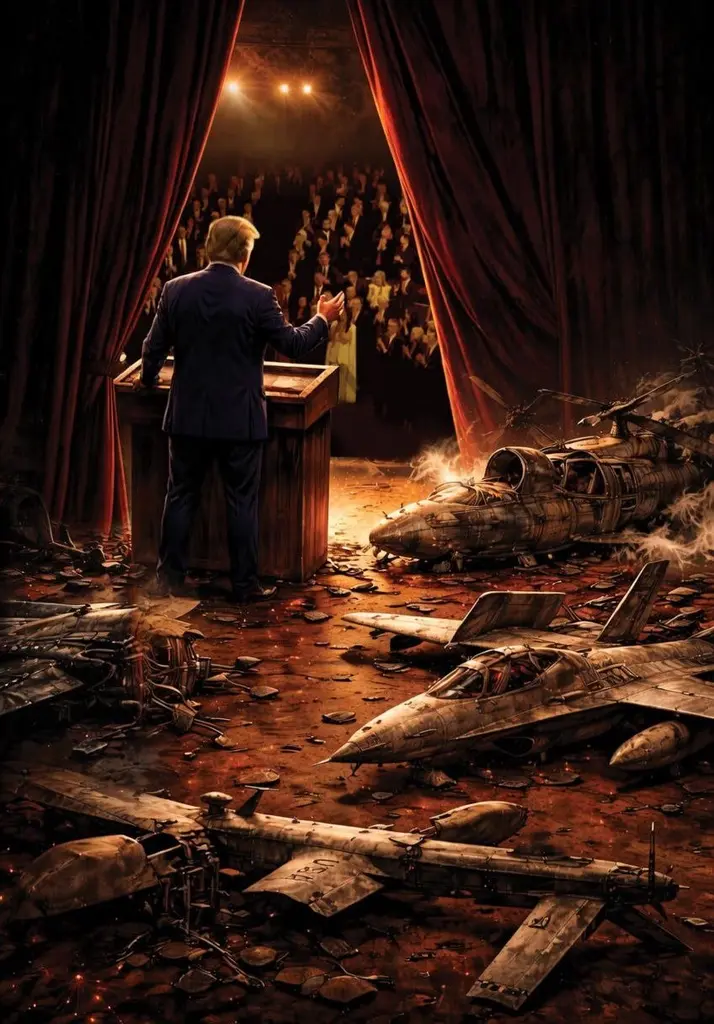
The embarrassing botching of the pilot rescue session raises significant doubts about the repeated claims made by U.S. officials. Media analysts and military experts are now questioning how a military that cannot successfully execute a simple rescue mission—and consequently loses advanced assets like HC-130 aircraft and Black Hawk helicopters—can assert its capability to return Iran to the Stone Age or seize islands for uranium extraction. Such extensive losses against a limited target reveal a crumbling support structure and an inability to assess the opponent’s strength.
The Collapse of Advanced Equipment in Iran
Field reports indicate that Iranian armed forces, with comprehensive intelligence and readiness from defensive units, successfully neutralized all invading aircraft before they reached their target. The destruction of such expensive equipment highlights that American technology has lost its claimed effectiveness against Iran’s robust defensive network. This incident underscores that Washington’s calculations are based on unrealistic scenarios and that any misadventure on Iranian soil would be met with decisive retaliation and irreparable losses.
Hollywood Narratives and Strategic Impasse
While U.S. officials attempt to obscure the dimensions of this failure with cinematic narratives, the reality on the ground speaks of a military impasse. The inability to manage a crisis and rescue their own forces, especially when claiming absolute air superiority, sends a clear message to Washington’s regional allies and rivals. It has become evident that there is a vast chasm between verbal threats against Iran’s critical infrastructures and the capability to execute those threats. Once again, the U.S. has faced a historic and humiliating defeat on Iranian soil. For more on the implications of such failures, see U.S. Rescue Mission in Iran Ends in Historical Failure.
FEATURED
-

Australia Implements Strict Social Media Ban for Teens Under 16
-
Alarming Survey Reveals One in Ten Women in British Armed Forces Experience Sexual Violence
-
Google to Invest $40 Billion in Texas, Boosting AI and Cloud Infrastructure by 2027
-
Over 4,400 Victims of Clergy Abuse Reported in Italy: Calls for Church Accountability Intensify


