US Shifts Security Focus to Drug-Trafficking Regimes in New Foreign Policy Approach
The United States is shifting its security approach, now focusing on regimes linked to drug trafficking. This new doctrine targets the structures reliant on the underground economy, providing a fresh lens for analyzing Washington’s future behavior on the global stage.
The New Security Doctrine of Washington and the Redefinition of Interventionism
Recent events in Latin America, particularly the U.S. operations in Caracas that led to the arrest of Nicolás Maduro, illustrate a developing pattern in American foreign policy doctrine. This new framework, centered on combating regimes involved in drug trafficking, is gradually replacing the traditional paradigm of addressing international terrorism.
Analysts believe that by focusing on regimes whose economic structures are intertwined with drug trafficking, the U.S. is laying the groundwork for reconstructing legal and political justifications for interventionist actions framed as responses to transnational threats.
Venezuela: The First Operational Model of the New Doctrine
Venezuela has emerged as the first field for the implementation of this operational strategy. However, international observers assess that the scope of this doctrine will not be confined to Latin America; regions with governance structures linked to the underground drug economy may also become focal points of this security narrative.
Amidst this backdrop, the situation in Afghanistan under Taliban management has surfaced as one of the areas of interest in security analyses.
The State of the Underground Economy and Regional Vulnerabilities
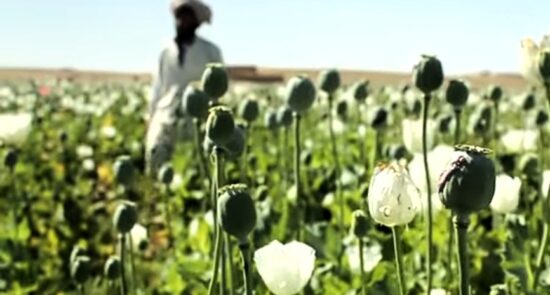
Despite official stances, analytical reports indicate that drug production and transit in Afghanistan continue to play a crucial role in the economic cycle of this trade. A significant increase in the production of synthetic drugs like methamphetamine, in addition to traditional products, keeps the region a central hub for this illicit industry.
Western security assessments characterize the Taliban’s main power centers as structural hubs involved in drug trafficking. Accordingly, the leadership of this group is now portrayed in new media and security narratives as a symbol of threats associated with this global network.


