Concerns Over Security Risks as Taliban Disarms Guards at Shiite Mosques
The Taliban’s recent actions to collect civilian firearms and disarm guards at Shiite mosques and religious sites in provinces such as Herat have raised significant concerns about the potential for a security vacuum…
The Collection of Firearms and the Emergence of a Security Vacuum
Since the Taliban regained power, there have been extensive operations aimed at gathering military weapons across Afghanistan, particularly from homes and non-governmental organizations. A particularly controversial aspect of this decision is the disarmament of local guards protecting Shiite mosques in Herat and other regions; these weapons were distributed in 2017 following a National Security Council resolution of the former government to ensure the safety of threatened sites. The collection of these arms without any replacement plans or alternative security forces has heightened the fears of new crimes among the residents.
A Bloodstained Calendar of Attacks on Religious Sites in Herat
Analysis of security incidents indicates that Herat has witnessed a wave of targeted shootings in the late months of last year and recent months. Notable cases include the attack in late April on the shrine of Syed Muhammad Agha Sabzpoosh in the Injil district, which resulted in 11 deaths and 11 injuries, gunfire directed at worshippers in the Muhammadia neighborhood of the Guzara district in May resulting in 6 fatalities, and a series of high-profile assassinations of Shiite clerics such as Aid Mohammad Etemadi, Rajab Ali Akhlaqi, and Muhammad Taqi Sadeqi, with some being claimed by ISIS.
The Geographic Scope of Terrorism: From Mazar-i-Sharif to Kunduz and Baghlan
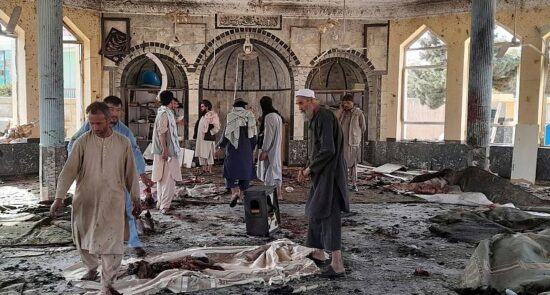
Security threats against the Shiite community are not confined to the west of the country. Over the past five years, prominent mosques such as the Three-Dokan Mosque in Mazar-i-Sharif, which saw over 30 killed and 90 injured, as well as the Imam Zaman Mosque in Pul-e-Khumri, Imam Bargah Mosque in Kandahar, and the Sayyidabad Mosque in Kunduz, have all been sites of deadly suicide bombings that claimed the lives of hundreds of worshippers and left many others injured.
The Attacks on Khanqahs and the Consequences of Disarmament
In addition to Shiites, followers of Sunni Sufi orders have also been targeted in terrorist attacks, notably the brutal assault on the Khalifa Sahib mosque and khanqah in Kabul that left 66 dead, and the shooting at the shrine of Syed Padshah Agha Sadat in the Nahrin district of Baghlan, which resulted in the death of 10 individuals. The continuation of these incidents alongside the Taliban’s claims of providing nationwide security indicates that without the active and armed presence of local protectors, religious sites will remain vulnerable targets for extremist groups.
-

Taliban Intensifies Pressure on Afghanistan’s Shia Community: Educational Institutions Targeted
-
Funding Crisis Threatens Women’s Organizations in Afghanistan
-
Clashes Erupt in Kamdish as Taliban and Afghanistan Freedom Front Engage in Heavy Fighting
-
Herat’s Trade Boom: Exchanges with Kazakhstan Reach $581 Million
-
Tensions Flare Again Along the Durand Line Amid Conflicting Claims
-
Human Rights Advocates Urge Action Against Taliban’s Suppression of Religious Minorities in Afghanistan