1.4 Million Afghan Girls Denied Education as Hope Remains Amidst Challenges
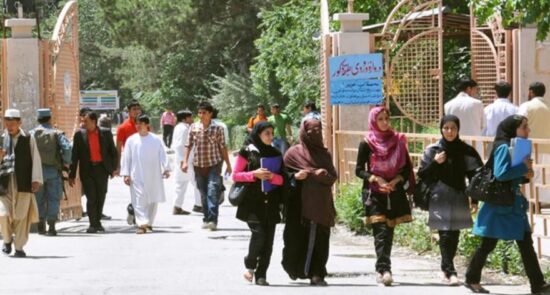
Over 1.4 million Afghan girls are unable to continue their education due to restrictions on schooling. Nevertheless, some remain hopeful about their futures despite these challenges.
Education Challenges: 1.4 Million Afghan Girls Deprived of Learning
In Afghanistan, following recent political changes, schools and universities have been closed to girls, resulting in over 1.4 million being denied education. Shabnam Noori, one such girl, is currently learning at a private English language institute in Kabul. She, having enrolled in the 10th grade in 2021, believes that Afghan girls should not give up on their pursuit of education.
UNESCO: Predictions of Increased Educational Deprivation to 4 Million Girls
On World Science Day, the plight of over 1.4 million Afghan girls was highlighted as part of the educationally deprived population. UNESCO and UNICEF have issued a joint report warning that if the current situation persists, the number of girls deprived of education could rise to 4 million by 2030. The organizations have also indicated a severe shortage of 20,000 female teachers and 5,000 health workers.
Afghanistan’s Educational Future at Risk: Teacher and Health Staff Shortages
Since the Taliban’s return to power, education for girls beyond the sixth grade has been halted, and in December 2022, universities were also closed to women. While girls seek education through online and private courses, Hoda Jabarian, a UNESCO coordinator, emphasizes that no alternative can substitute for the direct presence of girls in schools.
Hamid Karzai Calls for Immediate Reopening of Girls’ Schools
Hamid Karzai, the former President of Afghanistan, has once again called for the immediate reopening of schools and universities for girls on the occasion of World Science Day. He stressed that sustainable development can only be achieved by securing the right to education.


