Recent Pakistani Attacks on Afghan Territory; Proxy War or Washington\’s Political Message?
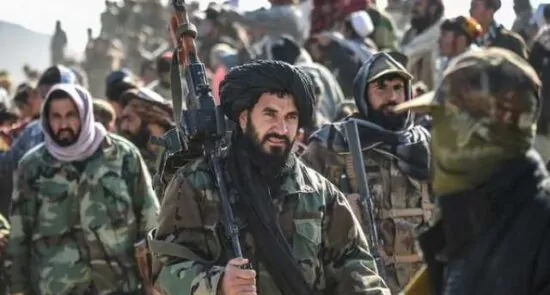
Following the increase in border clashes between Pakistan and the Taliban of Afghanistan, Islamabad has pointed the finger of blame at India, accusing New Delhi of provoking the Taliban. At the same time, speculations about the role of the U.S. in Pakistan\’s recent attacks on Afghan soil have added new dimensions to the regional crisis…
Islamabad\’s Accusation Against New Delhi
The French news agency wrote in an analysis that as bloody clashes between Pakistani forces and the Taliban of Afghanistan have escalated, Pakistani officials have accused India of exacerbating this crisis. Shahbaz Sharif, the Prime Minister of Pakistan, made strong statements saying that New Delhi has provoked the Taliban of Afghanistan for confrontation. Meanwhile, Khawaja Asif, the Minister of Defense of Pakistan, referred to the Taliban administration as India\’s representative in Kabul and claimed that recent close relations between the Taliban and New Delhi are the result of a calculated design by India to weaken Pakistan.
Historical Background of Islamabad and New Delhi’s Rivalry
The tense relations between India and Pakistan have a long history. The two countries have fought several wars since the partition of the subcontinent in 1947 and continuously accuse each other of supporting rebels and interfering in internal affairs. However, in recent months, signs of increased interaction between the Taliban of Afghanistan and the Indian government have emerged; a trend that has heightened Islamabad\’s concerns.
Proximity of the Taliban and India; a Red Alert for Pakistan
While relations between Kabul and Islamabad have deteriorated, New Delhi formally welcomed Amir Khan Muttaqi, the Foreign Minister of the Taliban, an initiative that sparked outrage among Pakistani officials. Wahid Faqiri, an Afghan analyst, told the French news agency that inviting the Taliban\’s foreign minister for talks in New Delhi was an attempt by India to increase psychological pressure on Pakistan.
Escalation of Border Clashes and Crossfire
Tensions intensified following explosions in Kabul and Paktika. The Taliban blamed Pakistan for unprecedented aggression and, in response, carried out retaliatory attacks along the border. This crossfire continued for over a week, accompanied by air and artillery strikes. Following these clashes, both sides eventually signed a new ceasefire agreement on October 19.
Blaming Neighbors; An Old Policy in Islamabad and Kabul Relations
Analysts say that relations between Afghanistan and Pakistan have transitioned from cooperation to open rivalry since the Taliban\’s return to power. Islamabad, which initially viewed the Taliban\’s return positively, now accuses them of sheltering the Tehrik-i-Taliban Pakistan (TTP); a group responsible for many of the recent attacks against Pakistani security forces. Islamabad security sources have stated that over a hundred Pakistani soldiers were killed in October alone in attacks carried out by perpetrators who entered from Afghan soil.
Domestic Pressure and the Refugee Crisis
The increase in violence in Pakistan has led the government to adopt a stricter policy towards Afghan refugees. In the last two years, thousands of Afghan asylum seekers have been expelled from Pakistan due to rising insecurity; an action that has faced criticism from international organizations.
Views of Diplomats and Analysts
Maleeha Lodhi, a former diplomat from Pakistan, pointed out the visit of the Taliban\’s foreign minister to India, stating that while this visit may have been provocative, the main reason for Pakistan\’s reaction is the Taliban\’s inability to control the activities of the Pakistani Taliban. In contrast, New Delhi dismissed Islamabad\’s accusations and stated that Pakistan is trying to evade responsibility for its internal problems.
Ongoing Crisis; Speculations About the Role of the U.S.
Alongside these developments, recent reports indicate that the Pakistani army has launched extensive attacks on Afghan soil with U.S. intelligence support. On October 14 and 15, Pakistani forces targeted the regions of Spin Boldak, Khost, and Kunar with air strikes; the Taliban stated that dozens of civilians were killed and injured in these operations. However, Islamabad claimed that these attacks were a response to terrorist movements from Afghan soil. Sources say the accuracy of these attacks seems unlikely without U.S. intelligence cooperation. According to experts, Washington and Islamabad have resumed their security cooperation in recent months; while the relationship between the Taliban and the U.S. has soured due to the Taliban\’s rejection of Washington\’s request to use Bagram Air Base.
A Political Message Behind Recent Attacks
Regional analysts believe that Pakistan\’s attacks have been conducted with a green light or deliberate silence from Washington to show the Taliban that ignoring U.S. demands will come at a cost. Both countries, the United States and Pakistan, are dissatisfied with the Taliban\’s behavior; the former due to harboring extremist groups, and the latter due to the growing threat of the Pakistani Taliban. Consequently, recent attacks are viewed as not only a military response to border threats, but also a political message to Kabul; a message that warns that if current policies continue, international pressures against the Taliban will increase.
-

Taliban Ambassador Blames Pakistan’s ISI for Conspiracy Following Deadly Washington Shooting
-
Pakistan Army Warns: $7.2 Billion in U.S. Weapons Left in Afghanistan a Major Threat to Regional Security
-
U.S. Plans Controversial Return of CIA-Trained Afghan Forces Amidst Rising Tensions
-
Afghanistan Urges UN Action Against Pakistan’s Border Violations Amid Civilian Casualties
-
Deadlock in Islamabad-Istanbul Talks: Taliban Rejects Pakistan’s Demands Over India’s Role
-
Urgent Call to Reopen Afghanistan-Pakistan Trade Routes Amidst $300 Million Losses


FEATURED
-
Australia Implements Strict Social Media Ban for Teens Under 16
-
Alarming Survey Reveals One in Ten Women in British Armed Forces Experience Sexual Violence
-
Google to Invest $40 Billion in Texas, Boosting AI and Cloud Infrastructure by 2027
-
Over 4,400 Victims of Clergy Abuse Reported in Italy: Calls for Church Accountability Intensify


