Al-Qaeda Signals Revival in Afghanistan with Hamza bin Laden’s Leadership
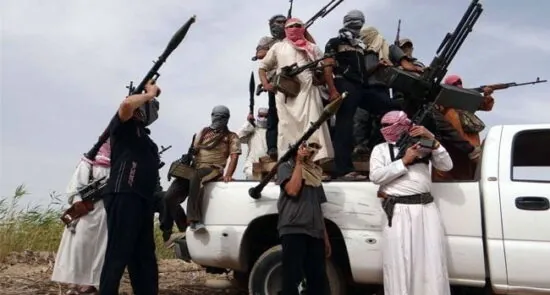
The TIC research organization (Tracking al-Qaeda) has claimed to have credible evidence regarding the survival and activities of Hamza bin Laden, the leader of al-Qaeda in Afghanistan. This organization has issued a warning that al-Qaeda, in collaboration with the Haqqani Network of the Taliban, has begun the process of forming a unified Islamic army aimed at re-establishing a caliphate in the region. Their activities have notably intensified in the eastern and southern provinces of Afghanistan.
Formation of a Unified Islamic Army and the Role of the Taliban
The TIC (Transatlantic Consortium/Tracking al-Qaeda) released a serious report stating that over the past five years, based on several sources within al-Qaeda and the Taliban, they have obtained credible evidence confirming the ongoing presence and activities of Hamza bin Laden in Afghanistan. The organization emphasized that operational information, regular reports on meetings and movements, as well as verified videos and images, form the basis of this assessment.
Following the release of a video purportedly showing the al-Qaeda leader in Afghanistan, previous claims about the close relationship between the Taliban leadership and the new al-Qaeda leadership have resurfaced. Some news sources, citing TIC, have warned that:
The new al-Qaeda leadership, headed by Hamza bin Laden, has started to work with the Haqqani Network of the Taliban to establish a unified Islamic army.
The purpose of this structure is reportedly to rebuild and expand the caliphate throughout the Middle East, Asia, and Africa.
Security analyst Mahsa Hija has also reiterated her previous claim regarding multiple meetings between Taliban leader Haibatullah and Hamza bin Laden, as well as the Taliban’s commitment to providing security for him through special forces.
Significant Increase in Activities and Expansion of Influence
The Transatlantic intelligence agency has issued a new map warning that al-Qaeda’s activities in Afghanistan have considerably increased from August 2021 (when the Taliban regained control) to November 2024.
Operational centers: This map records dozens of training camps, safe houses, movement routes, and media centers of the group in the east, south, and parts of western Afghanistan.
Activity centers: The majority of al-Qaeda’s operations are concentrated in the provinces of Nangarhar, Kunar, Paktia, Paktika, Khost, and Kandahar—regions that serve as the main hubs for training and operational communications.
According to the report, the designated routes illustrated on the map indicate that al-Qaeda’s movements have expanded from Afghanistan to Pakistan, Iran, Central Asia, the Middle East, East Africa, Turkey, and even Europe.
Hosting 13,000 Foreign Fighters and Terrorism Convergence
Reports indicate that Afghanistan has become a primary gathering point for foreign terrorist groups:
UN estimates suggest that Afghanistan is currently hosting around 13,000 foreign fighters, including 6,250 members of the Tehrik-i-Taliban Pakistan (TTP), 3,000 ISIS-Khorasan members, 400 from al-Qaeda, 500 from the al-Qaeda subcontinent branch, and other groups such as the Islamic Movement of Uzbekistan and Tajikistan’s Ansarullah.
New Collaborations: ISIS fighters from Kunduz are using the region as a launching point to penetrate Central Asian countries. Al-Qaeda in the subcontinent, under the leadership of Osama Mahmood, has strengthened their collaboration with TTP, while al-Qaeda in the Arabian Peninsula is funneling fighters from the Middle East into Afghanistan.
The Long War Journal has also highlighted Osama Mahmood and Aatif Yahya Ghori as prominent leaders of al-Qaeda in Afghanistan, showcasing their roles in supporting the Taliban, with the U.S. State Department having set rewards of $10 million and $5 million for them, respectively.
-

Taliban Intensifies Pressure on Afghanistan’s Shia Community: Educational Institutions Targeted
-
Funding Crisis Threatens Women’s Organizations in Afghanistan
-
Clashes Erupt in Kamdish as Taliban and Afghanistan Freedom Front Engage in Heavy Fighting
-
Herat’s Trade Boom: Exchanges with Kazakhstan Reach $581 Million
-
Tensions Flare Again Along the Durand Line Amid Conflicting Claims
-
Human Rights Advocates Urge Action Against Taliban’s Suppression of Religious Minorities in Afghanistan