Afghanistan’s Labor Market Faces Crisis Amid Unemployment Surge
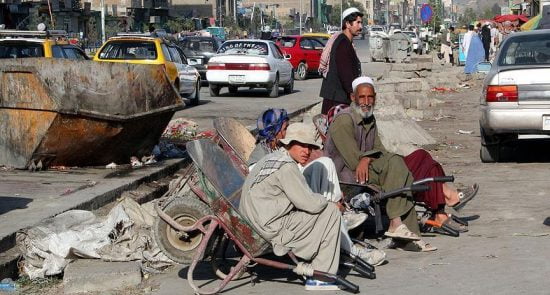
The lack of job opportunities in Afghanistan and the critical state of the labor market have significantly impacted the lives of thousands of workers and returning migrants. People are now calling on the government to create suitable employment opportunities for them.
Afghanistan’s Labor Market in Crisis
The dire situation of the labor market in Afghanistan, coupled with the absence of stable job opportunities, has posed serious challenges to the livelihoods of thousands of daily wage workers and returning migrants. Every morning, numerous workers gather at intersections and along the streets of Kabul in hopes of finding employment, yet many return home empty-handed.
Gulajan, a resident of Kabul who has gone to the Karte Naw area in search of work, expresses frustration over the lack of jobs, stating, “The caretaker government must provide job opportunities for the people and enhance employment by implementing public benefit projects.”
Another local worker, Mujahid, believes that only large-scale development projects initiated by the government can effectively address the unemployment crisis.
Alarming Statistics and Reports on Employment Status
This challenge has escalated sharply, with the International Labour Organization (ILO) releasing a new report on August 18, 2023, indicating that despite a 14% increase in employment levels compared to 2022, the growth in job opportunities is in no way keeping pace with the rapidly rising population.
According to forecasts from this organization, the number of employed individuals in Afghanistan is expected to reach about 8.5 million by 2026. However, the large-scale return of migrants from Iran and Pakistan has placed additional strain on the country’s fragile labor market.
Abdul Rahman, a migrant who has returned from Pakistan, expresses relief at being back in his homeland, saying, “We feel a sense of peace in our country, but unemployment is putting us under severe pressure; we urge officials to create job opportunities for returnees.”
Government Efforts to Improve Employment Conditions
On the other hand, the Ministry of Labor and Social Affairs of the caretaker government has announced that it created 40,000 direct job opportunities for citizens in the first two quarters of this year. Based on agreements signed with 14 government agencies, it has employed 1.2 million people out of a target of 1.4 million jobs.
Mohammad Sadiq Touhidi, a spokesperson for the Ministry of Labor, states that special programs for the entrepreneurship of returning migrants are being implemented in collaboration with other ministries, and some have successfully entered the job market.
Nevertheless, economic expert Sair Qureshi argues that the statistics will only be genuinely significant when the caretaker government focuses on the execution of infrastructure and public projects. Economic analysts believe that supporting private enterprises and attracting investments are the only practical solutions to help daily wage workers and returning migrants escape poverty and unemployment.
FEATURED
-

Google to Invest $40 Billion in Texas, Boosting AI and Cloud Infrastructure by 2027
-
Federal Court Documents Expose Teenagers’ Exposure to Explicit Content on Instagram
-
Europe Faces Unprecedented Heatwaves and Wildfires as Climate Crisis Intensifies
-
Australia Implements Strict Social Media Ban for Teens Under 16


