Social September 20, 2026
Short Link:Students in Nangarhar and Kunar Demand Improved Educational Conditions Amid Dress Code Focus
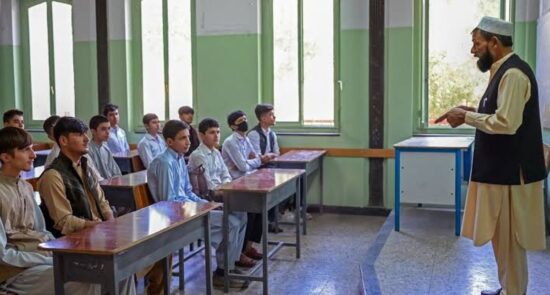
Students in Nangarhar and Kunar are expressing concerns over a severe shortage of teachers and textbooks, claiming that authorities focus excessively on their appearance.
Students in Nangarhar and Kunar: Education Quality Sacrificed for Attire
Several male students from the provinces of Nangarhar and Kunar have voiced their worries regarding the educational conditions at their schools. They report a significant shortage of teachers and textbooks while noting that officials prioritize their clothing and appearance over educational content.
According to the Taliban Ministry of Education’s dress code, students in state schools from grades 10 to 12 are required to wear white shirts and trousers. However, students in Nangarhar and Kunar insist that despite nearly ten days having passed since the new academic year began, many subjects lack assigned teachers, and there is a dire scarcity of textbooks.
A student from Nangarhar High School in Jalalabad, speaking anonymously, stated, “We have no teacher for important subjects like math, and we have only received three or four textbooks. The school principal emphasizes our clothing, and those who fail to wear the white uniform face physical punishment.”
Challenges Faced by Students in Nangarhar and Kunar
Students in Kunar province report facing similar challenges. A 12th-grade student in Asadabad noted, “Most of our classes are empty because there are very few teachers, but when it comes to rules, all attention is directed towards our sarongs and appearance.”
Another student in the province highlighted, “The quality of lessons has deteriorated, and no efforts are made to ensure the professionalism of the teachers. Our biology teacher is teaching physics, which creates significant challenges.”
Negative Impacts on Educational Quality
These complaints arise amid a broader crisis within Afghanistan’s educational system, which grapples with severe issues such as a lack of qualified teachers, insufficient learning materials, and inadequate infrastructure. A joint report from UNICEF and UNESCO indicates that over 90% of ten-year-old children in Afghanistan lack basic reading and comprehension skills.
Critics also emphasize that rather than improving the quality of education in state schools, greater emphasis has been placed on the development of religious schools. Official statistics reveal that by August 2025, the number of religious schools is expected to reach 23,000, while the total number of state and private schools is projected at 18,337.
Students in Nangarhar and Kunar insist that their primary concern for the new academic year extends beyond dress codes; they urgently need sufficient teachers and complete sets of textbooks.
-

Public Outcry Over Controversial Traffic Police Signage in Afghanistan
-
Fish Prices Soar in Nangarhar Amid Torkham Border Closure
-
Taliban Vows Retaliation Against Pakistani Airstrikes After Civilian Casualties
-
Taliban Reports Civilian Casualties from Pakistani Airstrikes in Eastern Afghanistan
-
Taliban Accuses Pakistani Military of Deadly Airstrike Using American Bombs
-
Pakistan’s Airstrikes in Afghanistan Spark Outrage and Claims of Civilian Casualties