World April 30, 2026
Short Link:2026: U.S. Naval Blockade of Iran Faces Historical Parallels and Challenges
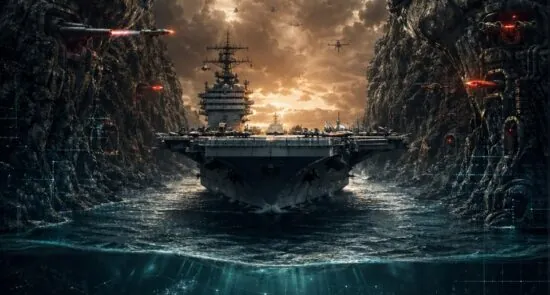
In 2026, Washington has chosen a strategy that, disregarding past experiences, has repeatedly failed against nations with “strategic depth” and “sturdy national identities.”…
1. From Napoleon’s ‘Continental System’ to Trump’s ‘Maximum Pressure’
One of the most notable historical examples that closely parallels the current naval blockade of Iran is Napoleon Bonaparte’s “Continental System” in the 19th century. Napoleon aimed to cripple Britain by closing European ports to British goods.1
- The Market Paradox: Just as Napoleon’s pressure led to an unprecedented rise in smuggling and evasion, Iran’s “Ghost Fleet” today utilizes older tankers and sophisticated tracking methods to turn the American blockade into a “sieve”.3
- Coalition Erosion: Napoleon pressured his allies to enforce the blockade, resulting in public outrage and fractures within France. In 2026, traditional U.S. allies like Britain and Spain have expressly refused to support Washington’s blockade, signaling a historical repetition of the breakdown of international consensus.1
2. America’s ‘Suez Moment’: The End of Maritime Hegemony
Military analysts have described the 2026 crisis in the Strait of Hormuz as America’s “Suez Moment”.7 In 1956, Britain and France, under the illusion of remaining world powers, attempted to forcibly reclaim the Suez Canal but faced a humiliating defeat that marked the end of classical colonialism.7
- Inability to Impose Will: Washington believed that deploying expensive carrier groups such as the USS Gerald R. Ford could reopen the Strait of Hormuz, yet the geography and asymmetric tactics of Iran have proven that the era of imposing imperial will through “super-carrier fleets” is over.7
- Failure of Deterrence: Just as the Suez defeat permanently tarnished Britain’s credibility, the Pentagon’s inability to secure shipping against Iranian drones and smart mines has signaled America’s declining power worldwide.7
3. Lessons from Vietnam: The Trap of ‘Wicked Problems’
At the root of America’s current failures lies a fundamental misunderstanding of the distinction between “simple” issues and “wicked problems.”2
- Technological Delusion: During the Vietnam War, then-Secretary of Defense Robert McNamara relied on quantitative data and heavy bombing (Operation Rolling Thunder) under the misconception that he could break Hanoi’s will.11 Donald Trump, threatening to return Iran to the “Stone Age” (echoing General Curtis Lemay’s comments during the Vietnam War), is falling into the same strategic trap.11
- National Resilience: Vietnam’s history demonstrated that bombing infrastructure does not necessarily lead to political surrender. In 2026, Iran has shown that the “pain tolerance threshold” among its leaders and the nation significantly surpasses American taxpayers’ patience with soaring gas prices.9
4. A Comparative Analysis: The Tanker War (1980s) and the Realities of 2026
Pentagon strategists looking back at the “Earnest Will” operations from the 1980s believed they could repeat the oil tanker escort model.14 However, they overlooked a critical reality: the evolution of asymmetric technology.
- Natural Shooting Gallery: The Strait of Hormuz during the 1980s was a simple mine-laying site, but by 2026, it has transformed into a “shooting gallery,” where ballistic missiles like the “Persian Gulf” and “Ghaadr” are hidden in underground missile cities and are virtually indestructible.7
- Attrition Costs: In the 1980s, the costs of escorts were manageable for the U.S. In 2026, however, America finds itself using $15 million THAAD interceptors to counter Iran’s $20,000 drones; a paradox that analysts say makes the continuation of warfare a “mathematical impossibility” for the Pentagon’s budget.7
Conclusion: A Standstill Against the Logic of History
Historical experiences clearly illustrate that maritime blockades against a country that possesses geographical advantages have never triumphed. By ignoring the lessons of Vietnam, the Suez Crisis, and even Napoleon’s failures, the U.S. enters a gamble that is likely to deplete its military reserves and further diminish its global standing.7 Understanding this history, Iran has turned the Strait of Hormuz into a lever that effectively demonstrates that American maritime hegemony can no longer alter the political realities of the 21st century.10
Works cited
A FAILED CEASEFIRE? ON THE AMERICAN NAVAL BLOCKADE OF IRAN – Geojuristoday, accessed April 30, 2026, https://www.geojuristoday.in/post/a-failed-ceasefire-on-the-american-naval-blockade-of-iran
Why Coercion Failed in Iran – Small Wars Journal, accessed April 30, 2026, https://smallwarsjournal.com/2026/03/12/why-coercion-failed-in-iran/
US naval blockade strains Iran’s already fragile economy | International | EL PAÍS English, accessed April 30, 2026, https://english.elpais.com/international/2026-04-24/us-naval-blockade-strains-irans-already-fragile-economy.html
How Real Is the Naval Blockade of Iran?, accessed April 30, 2026, https://www.meforum.org/mef-observer/how-real-is-the-naval-blockade-of-iran
TABNAK, accessed April 30, 2026, https://www.tabnak.ir/fa/news/1367891/%D9%82%D8%A7%D9%84%DB%8C%D8%A8%D8%A7%D9%81-%D8%A8%D8%B1-%D8%AF%D8%B4%D9%85%D9%86-%D9%BE%DB%8C%D8%B1%D9%88%D8%B2-%D8%B4%D8%AF%DB%8C%D9%85-%D8%A7%D9%85%D8%A7-%D8%A7%D8%B1%D8%AA%D8%B4-%D8%AF%D8%B4%D9%85%D9%86-%D9%85%D9%86%D9%87%D8%AF%D9%85-%D9%86%D8%B4%D8%AF%D9%87
S. military is poised to blockade Iranian ports, while Tehran threatens ports in the Mideast, accessed April 30, 2026, https://www.pbs.org/newshour/world/u-s-military-is-poised-to-blockade-iranian-ports-while-tehran-threatens-ports-in-the-mideast
US Naval Intervention in the Strait of Hormuz: Risk Scenario, accessed April 30, 2026, https://www.specialeurasia.com/2026/04/12/us-naval-intervention-hormuz/
Suez and the Lessons of History – The National Interest, accessed April 30, 2026, https://nationalinterest.org/blog/paul-pillar/suez-the-lessons-history-8056
Extended naval blockade is admission US military escalation poses even greater risk, accessed April 30, 2026, https://www.theguardian.com/world/2026/apr/23/extended-naval-blockade-is-an-admission-us-military-escalation-poses-even-greater-risk
Iran’s Strait of Hormuz Gambit and the Limits of U.S. Military Power – CSIS, accessed April 30, 2026, https://www.csis.org/analysis/irans-strait-hormuz-gambit-and-limits-us-military-power
Has the US forgotten the lessons of Vietnam? – Counterfire, accessed April 30, 2026, https://www.counterfire.org/article/has-the-usa-forgotten-the-lessons-of-vietnam/
From Vietnam to Iran : Lessons US ignored – The Indian Panorama, accessed April 30, 2026, https://www.theindianpanorama.news/opinion/as-i-see-it/from-vietnam-to-iran-lessons-us-ignored/
Trump likes a naval blockade. But Iran presents big differences from Venezuela and Cuba, accessed April 30, 2026, https://apnews.com/article/iran-blockade-strait-hormuz-trump-navy-f7af4e8f73dc75e158790db8c32296ac
Analysis: The US protected ships from Iran in the Strait of Hormuz in the ’80s. Could it again?, accessed April 30, 2026, https://www.sooleader.com/michigan-news-ap/analysis-the-us-protected-ships-from-iran-in-the-strait-of-hormuz-in-the-80s-could-it-again-12187638
Vietnam and After: Failure in the Vietnam War and the Enduring Defects in US Strategic Culture – Military Strategy Magazine, accessed April 30, 2026, https://www.militarystrategymagazine.com/article/vietnam-and-after-failure-in-the-vietnam-war-and-the-enduring-defects-in-us-strategic-culture/
Tactical Success, Strategic Failure? Washington Walks the Path to …, accessed April 30, 2026, https://warontherocks.com/tactical-success-strategic-failure-washington-walks-the-path-to-defeat-in-iran
-

Democratic Senators Condemn Trump’s Threats Against Iran as Potential War Crimes
-
UK Rebuffs Trump’s Military Blockade Plan for Strait of Hormuz
-
Five-Dollar Gasoline Prices: A Looming Crisis for Trump’s Administration
-
Iran’s Strategy: Strait of Hormuz Closure as a Geopolitical Lever
-
Leon Panetta Critiques Trump’s Military Strategy on Iran
-
Gulf States Question U.S. Security Commitments Amid Rising Tensions


