Women’s Healthcare Access in Afghanistan Compromised by Taliban’s Mahram Requirement
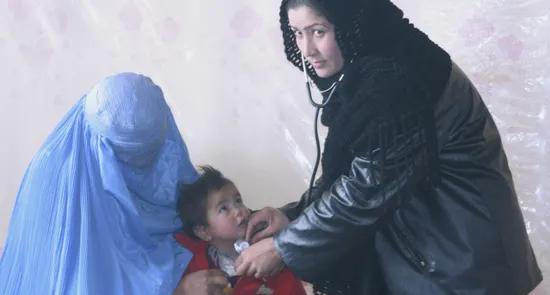
The Taliban’s requirement for women to be accompanied by a mahram has posed serious challenges for midwives in Afghanistan and has restricted women’s access to healthcare services.
Struggles Faced by Midwives Due to Mahram Restrictions
The Taliban’s mandate requiring a male guardian for women has created significant barriers for midwives, particularly in remote districts, severely impacting the delivery of healthcare services.
Midwives’ Experiences and Daily Challenges
Midwives, especially in rural areas, are expressing their struggles stemming from the mahram condition. A 42-year-old midwife from the Balkhab district of Sar-e Pol province shares, “Traveling to various areas to see my patients presents many difficulties because my husband has passed away, and finding a mahram is challenging for me.” She recounts an experience where, due to the absence of a mahram, she was detained by Taliban intelligence for eight hours.
Women’s Demand for Access to Healthcare Services
Rural women are also complaining about the lack of healthcare services in their areas. Sharifa, a mother of seven from Nangarhar, states that access to health centers and women doctors is extremely limited. She highlights the challenges women face during pregnancy and childbirth.
Officials’ Responses and a Concerning Future
Efforts to obtain comments from officials at the Taliban’s Ministry of Public Health have been unsuccessful. Experts and international organizations warn that the continued situation may lead to increased maternal and infant mortality rates. According to statistics, Afghanistan still has one of the highest maternal and infant mortality rates in the world.
-

Taliban Intensifies Pressure on Afghanistan’s Shia Community: Educational Institutions Targeted
-
UN Calls for Urgent Action as Afghanistan Faces Deepening Crisis
-
Funding Crisis Threatens Women’s Organizations in Afghanistan
-
Clashes Erupt in Kamdish as Taliban and Afghanistan Freedom Front Engage in Heavy Fighting
-
Herat’s Trade Boom: Exchanges with Kazakhstan Reach $581 Million
-
Afghanistan’s Road Crisis: Over 92% Unpaved, Threatening Access to Healthcare