Taliban Media Unveils ISIS Confessions Amidst Ongoing Pakistan Tensions
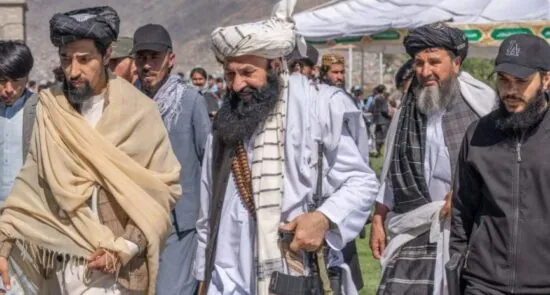
Taliban-affiliated media has released videos purportedly containing confessions from ISIS members on the first anniversary of the assassination of Khalil-ur-Rahman Haqqani, the former minister of refugees for the group, claiming that the plan and guidance for his assassination took place in Balochistan, Pakistan…
On the first anniversary of the assassination of Khalil-ur-Rahman Haqqani, former minister of refugees for the Taliban government, media affiliated with this group published videos of what they call confessions from an ISIS member, in which the finger of accusation pointed directly towards Pakistani soil.
Operations Directed from Balochistan
In the video, an individual introducing himself as Hamza claims to have been in charge of the attack on Haqqani, explicitly stating:
The design of the operation was planned and executed from Balochistan, Pakistan, and the direct perpetrator of the attack was an individual named Osman, with the necessary training for carrying out the operation also conducted in Balochistan under the security umbrella of Pakistan.
The al-Marsad media, which is close to Taliban intelligence, has also confirmed this claim, announcing that the ISIS suicide bomber exploded himself at the Ministry of Refugees after receiving orders from Pakistan.
Crisis of Tensions between the Taliban and Pakistan
Khalil-ur-Rahman Haqqani was killed a year ago in a suicide attack at the Ministry of Refugees; an attack for which the Khorasan branch of ISIS claimed responsibility. This dossier has complex dimensions.
Some experts believe that his death has weakened the position of the Haqqani network. Another aspect of the significance of this dossier is the ongoing tension between the Taliban and Pakistan, where both sides accuse each other of supporting hostile insurgent groups.
The Taliban claims through the release of these videos that Balochistan is a center for the training and equipping of ISIS. In response, Islamabad rejects this claim and accuses the Taliban of turning Afghanistan into a sanctuary for regional and global terrorist groups, including the Tehrik-i-Taliban Pakistan (TTP). Additionally, the UN Security Council calls for urgent changes in Taliban policies amid Afghanistan’s humanitarian crisis, highlighting the crisis’s further implications.
FEATURED
-

Australia Implements Strict Social Media Ban for Teens Under 16
-

Alarming Survey Reveals One in Ten Women in British Armed Forces Experience Sexual Violence
-
Google to Invest $40 Billion in Texas, Boosting AI and Cloud Infrastructure by 2027
-
Over 4,400 Victims of Clergy Abuse Reported in Italy: Calls for Church Accountability Intensify


