UN Security Council Calls for Urgent Changes in Taliban Policies Amid Afghanistan’s Humanitarian Crisis
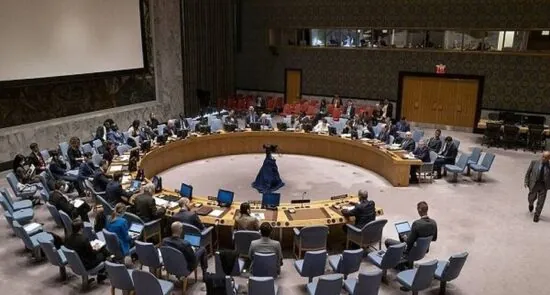
The member countries of the United Nations Security Council expressed serious concern about the human rights situation and humanitarian crisis in Afghanistan during a meeting and called for a change in the Taliban’s policies…
The UN Security Council meeting held yesterday witnessed widespread concern among member countries regarding the human rights situation and humanitarian crisis in Afghanistan. Most participants called for a change in the Taliban government’s approach.
UNAMA Report: Severe Poverty and Intervention in Daily Life
Georgette Gagnon, head of the United Nations Assistance Mission in Afghanistan (UNAMA), described the country’s situation as follows:
Restrictions on women: Women and girls continue to be deprived of education and many areas of public life.
Severe poverty: Even though the security situation appears calm, the people of this country are facing severe poverty.
Narrowing space: The restriction of media freedom and the treatment of journalists have tightened the space for public participation.
Widespread intervention: The Taliban’s implementation of the law of promoting good and preventing wrong has led to widespread intervention in the daily lives of both women and men.
Ms. Gagnon emphasized that integration with the Taliban could only be possible after they fulfill their international commitments. She warned that the Taliban’s reluctance towards multilateral cooperation poses the risk of cutting off collaboration with aiding countries and further isolating Afghanistan.
The US, Pakistan, and Russia in the Security Council
The US representative stated that the Taliban are responsible for the suffering of the Afghan people due to their policies and are not trustworthy for negotiations. He recommended that the Security Council should act cautiously in their dealings with them.
The Pakistani representative urged the Taliban to create favorable conditions for honest dialogue and to come out of the state of denial of reality that benefits no one.
The Russian representative emphasized that the international community must consider the needs of Afghans without any double standards and conduct serious and trust-based dialogue with the Taliban regarding all problems.
The Chinese representative, referring to the UN report, underscored the active presence of terrorist groups, including ETIM and TTP, which continue to carry out attacks against neighboring countries.
Taliban: Human Rights Guaranteed within the Framework of Islamic Laws
Zabiullah Mujahid, the spokesman for the Taliban government, had stated before the meeting in response to UNAMA’s announcement that the rights of all people in Afghanistan are guaranteed within the framework of Islamic laws and added that Afghans are not obliged to accept the human rights of other communities that are defined differently as their own rights.
Solution to the Crisis from the Perspective of the Interim Head of Afghanistan’s Mission
Nasir Ahmad Faiq, the acting permanent representative of Afghanistan to the United Nations, stated at this meeting that Afghanistan will not achieve stability through isolation, pressure, or imposed governance, and humanitarian aid cannot keep the country stable.
He emphasized that the main source of the crisis is political, and its solution could be an inclusive and legitimate government that guarantees Afghanistan’s political stability and national unity. He called on the international community:
To use its leverage to influence the Taliban’s decision regarding the acceptance of political dialogue and to negotiate with a broad set of Afghan democratic forces to reach an agreement that leads to the establishment of an inclusive and legitimate government.
Representatives of other countries collectively emphasized the continuation of a fragile situation, the human rights crisis, poverty, and restrictions on women’s participation, stating that only through pressure and principled engagement from the international community can sustainable solutions be reached.
FEATURED
-

Australia Implements Strict Social Media Ban for Teens Under 16
-
Alarming Survey Reveals One in Ten Women in British Armed Forces Experience Sexual Violence
-
Google to Invest $40 Billion in Texas, Boosting AI and Cloud Infrastructure by 2027
-
Over 4,400 Victims of Clergy Abuse Reported in Italy: Calls for Church Accountability Intensify


