Al-Qaeda’s Bold Revival: Hamza bin Laden and the Formation of a Unified Islamic Army in Afghanistan
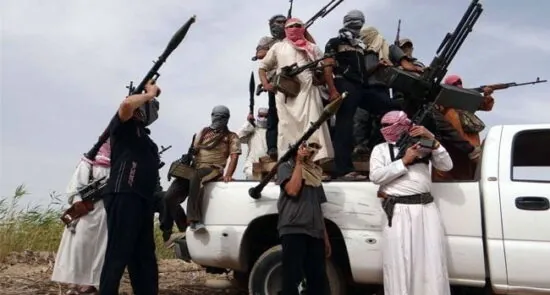
The TIC Research Institute (Tracking Al-Qaeda) claims to have obtained credible evidence of the life and activities of Hamza bin Laden, the leader of Al-Qaeda in Afghanistan. This institution has warned that Al-Qaeda, in collaboration with the Haqqani network of the Taliban, has begun the process of forming a unified Islamic army to reconstruct the caliphate in the region, and its activities have significantly increased in the eastern and southern provinces of Afghanistan…
The Plan to Form a Unified Islamic Army and the Role of the Taliban
Following the release of a video attributed to the presence of the Al-Qaeda leader in Afghanistan, previous claims about the close relations between the Taliban and the new leadership of Al-Qaeda were reiterated. Some news sources cited by TIC have warned that: The new leadership of Al-Qaeda, led by Hamza bin Laden, has begun the formation of a unified Islamic army in cooperation with the Haqqani network of the Taliban.
The goal of this structure is stated to be the reconstruction and expansion of the caliphate in the Middle East, Asia, and Africa.
Mahsa Hijaz, a security writer, has also reiterated her previous claim regarding multiple meetings between the Taliban leader (Mullah Hibatullah) and Hamza bin Laden and the Taliban’s commitment to ensuring his security through special forces.
Significant Increase in Activities and Expansion of Influence
The Transatlantic Intelligence Organization has issued a new map warning that Al-Qaeda’s activities in Afghanistan have significantly increased from August 2021 (the Taliban takeover) to November 2024.
Operational Centers: This map records dozens of training camps, safe houses, transit routes, and media centers of this group in the east, south, and parts of the west of Afghanistan.
Focal Points of Activity: The highest concentration of Al-Qaeda’s activities is in the provinces of Nangarhar, Kunar, Paktia, Paktika, Khost, and Kandahar; areas that serve as the main hub for training and operational communications.
According to this report, the designated routes on the map indicate that Al-Qaeda’s movements have expanded from Afghanistan to Pakistan, Iran, Central Asia, the Middle East, East Africa, Turkey, and even Europe.
Hosting 13,000 Foreign Fighters and the Convergence of Terrorism
Reports indicate that Afghanistan has become a hub for the gathering of foreign terrorist groups: UN estimates show that Afghanistan is hosting about 13,000 foreign fighters, including 6,250 fighters from Tehrik-i-Taliban Pakistan (TTP), 3,000 members of ISIS-Khorasan, 400 from Al-Qaeda, 500 from the Al-Qaeda branch in the subcontinent, and other groups including the Islamic Movement of Uzbekistan and the Tajikistan Ansarullah.
New Collaborations: ISIS fighters use Kunduz as a launch point to countries in Central Asia. Al-Qaeda in the subcontinent, under the leadership of Osama Mahmood, has strengthened its cooperation with TTP, and Al-Qaeda in the Arabian Peninsula is also directing its fighters from the Middle East to Afghanistan.
The Long War Journal has introduced Osama Mahmood and Aatif Yahya Ghori as prominent leaders of Al-Qaeda in Afghanistan, highlighting their role in supporting the Taliban, and has reported that the US State Department has set rewards of $10 million and $5 million for them.
FEATURED
-

Australia Implements Strict Social Media Ban for Teens Under 16
-
Alarming Survey Reveals One in Ten Women in British Armed Forces Experience Sexual Violence
-
Google to Invest $40 Billion in Texas, Boosting AI and Cloud Infrastructure by 2027
-
Over 4,400 Victims of Clergy Abuse Reported in Italy: Calls for Church Accountability Intensify


